

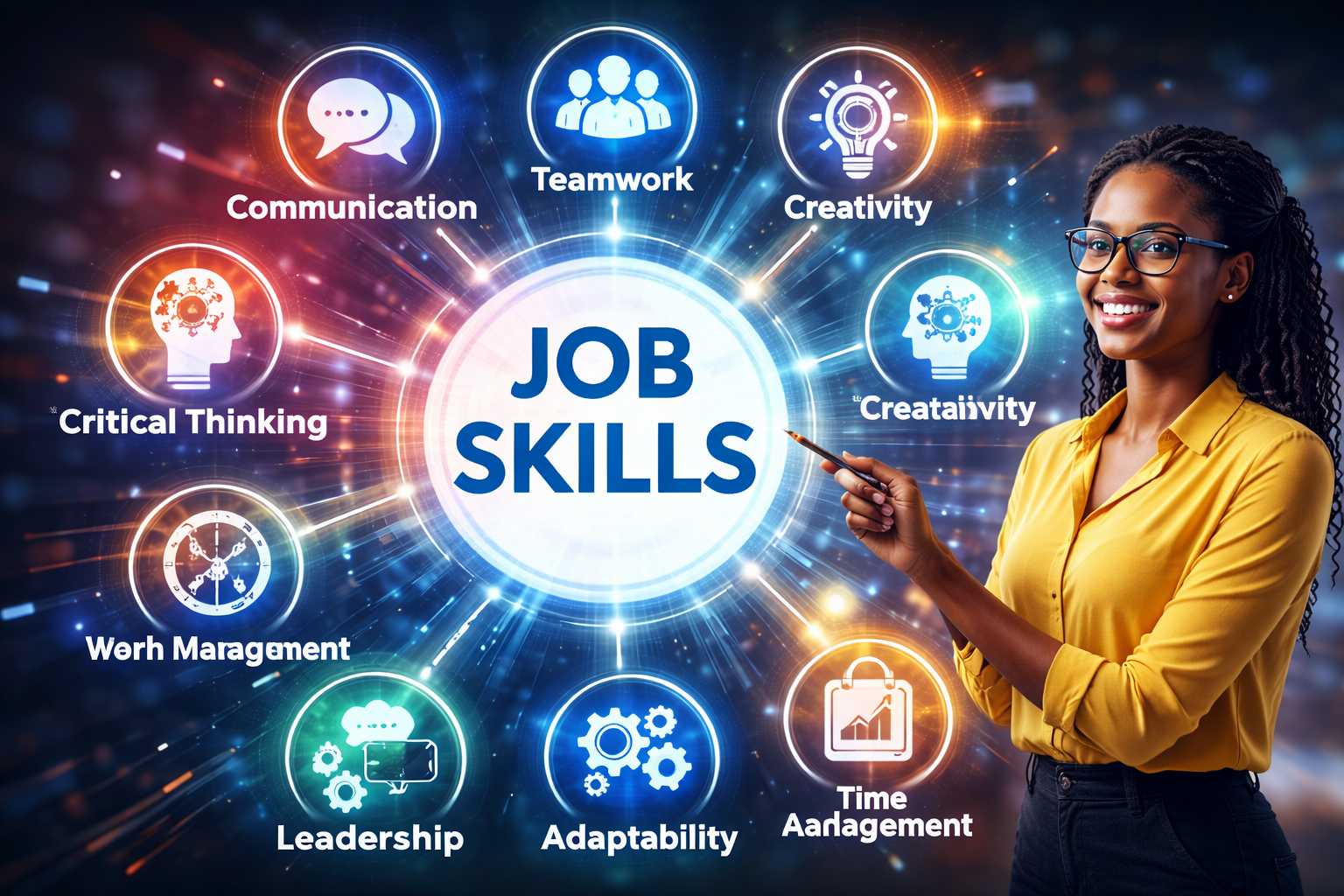
In today’s fast-evolving digital landscape, artificial intelligence (AI) is no longer a niche skill reserved for tech experts. Across industries, from banking and healthcare to agriculture and entertainment, AI is transforming how businesses operate and make decisions. For Nigerian fresh graduates entering the workforce, understanding AI soft skills every Nigerian graduate must have is just as crucial as technical knowledge. These skills ensure that graduates are not only employable but also capable of thriving in an AI-driven world.
Why AI Soft Skills Matter for Nigerian Graduates
While technical skills such as Python programming, machine learning, and data analytics are essential, employers increasingly value soft skills that complement AI tools. Soft skills allow graduates to interpret AI outputs, communicate insights, make ethical decisions, and collaborate effectively. In a country like Nigeria, where industries are adopting AI at varying speeds, graduates with the right soft skills can stand out and drive innovation in both traditional and tech-forward sectors.
By mastering these skills, fresh graduates can bridge the gap between technology and human decision-making, making them indispensable to employers.
Exploring The 10 Key AI Soft Skills Every Nigerian Graduate Must Have
1. Critical Thinking and Analytical Mindset
AI can process large datasets and generate predictions, but it cannot inherently determine the validity or relevance of those results. Nigerian graduates need to evaluate AI outputs critically, ask questions about underlying assumptions, and detect patterns that may indicate bias or error. For instance, a marketing AI tool might suggest targeting a certain demographic, but without human critical thinking, it may reinforce outdated stereotypes or exclude other potential audiences. Cultivating analytical thinking ensures graduates make informed, responsible decisions that complement AI capabilities rather than blindly relying on them.
2. Adaptability and Lifelong Learning
The AI ecosystem evolves constantly, with new frameworks, algorithms, and software emerging frequently. Graduates must be flexible and eager to learn, able to pivot quickly when industries adopt new technologies or workflows change. For example, cloud-based AI platforms may replace older local systems, or machine learning tools may require new coding skills. Embracing continuous learning—through online courses, workshops, or professional networks—keeps graduates competitive and able to seize opportunities across sectors.
3. Problem-Solving Skills
AI is most valuable when applied to real-world challenges, but human insight is essential for accurately defining problems. Graduates must break down complex issues, identify where AI can add value, and implement solutions effectively. For example, in healthcare, AI may analyse patient data to flag risk factors, but graduates need to interpret results, design intervention strategies, and communicate findings to medical staff. Problem-solving in AI contexts is transferable across industries, from fintech to logistics.
4. Ethical Awareness and Responsible AI Use
AI systems can inadvertently cause harm if used without ethical consideration. Graduates must understand principles such as fairness, transparency, accountability, and privacy. This involves questioning whether data is biased, ensuring models do not discriminate, and safeguarding sensitive information. Ethical awareness not only protects organisations legally and socially but also builds trust with clients, users, and stakeholders.
Consider reading these:
- Nigeria Expands AI Talent Pool with Microsoft Training 350000
- Famous Job Motivational Quotes in the Era of AI
5. Communication and Storytelling
The ability to translate technical AI insights into clear, actionable narratives is increasingly valuable. Graduates must present complex data findings to non-technical colleagues, clients, or managers in a way that supports decision-making. Storytelling involves simplifying insights without losing accuracy, highlighting implications, and recommending next steps. Effective communication ensures that AI adds tangible value rather than remaining an abstract concept.
6. Collaboration and Teamwork
AI projects rarely happen in isolation. They require close cooperation between developers, analysts, designers, and business leaders. Graduates must work in teams, respect diverse perspectives, manage conflicts, and coordinate tasks efficiently. Collaboration ensures that AI solutions are practical, user-friendly, and aligned with organisational goals, while teamwork strengthens professional networks and accelerates project success.
7. Creativity and Innovation
While AI can automate repetitive tasks, human creativity drives innovation. Graduates who think outside the box can identify novel applications for AI, optimise processes, and design new products or services. For instance, a creative graduate might use AI to develop personalised educational tools or predictive analytics for agriculture. Creativity combined with AI allows graduates to generate unique solutions that machines alone cannot conceive.
8. Data Literacy
Understanding data quality, structure, and limitations is critical in AI-driven workplaces. Graduates should know how to interpret datasets, recognise inconsistencies, and ask the right questions to make evidence-based decisions. Data literacy enables graduates to interact effectively with AI tools, ensuring outputs are meaningful, reliable, and actionable. Without this skill, AI insights can be misinterpreted, leading to poor decisions.
9. Decision-Making Confidence
AI offers recommendations, but humans remain accountable for the final decisions. Nigerian graduates must develop confidence in making choices, weighing AI insights against contextual knowledge, ethical considerations, and organisational priorities. Confident decision-making ensures that AI serves as a supportive tool rather than a crutch, enabling graduates to take initiative and demonstrate leadership in their roles. AI Careers
10. Resilience and Emotional Intelligence
AI-enabled workplaces can be fast-paced, competitive, and high-pressure. Graduates with emotional intelligence can manage stress, handle feedback constructively, and maintain healthy professional relationships. Resilience helps graduates navigate challenges, adapt to changing technologies, and recover from setbacks. Combined, these traits ensure long-term career growth and a sustainable, positive impact in AI-integrated work environments.
How to Develop AI Soft Skills as a Nigerian Graduate
-
Engage in Online Courses and Certifications – Platforms like Microsoft Learn, Coursera, and LinkedIn Learning offer AI and soft skill training.
-
Participate in Internships and Projects – Hands-on experience helps apply soft skills in real-world settings.
-
Join AI Communities and Networks – Connect with like-minded professionals to learn best practices and stay up to date.
-
Seek Mentorship – Guidance from experienced professionals can accelerate skill development.
-
Practice Continuous Learning – Regularly update both technical and soft skills to remain competitive.
Final Thoughts
For Nigerian fresh graduates, acquiring AI soft skills is no longer optional-it’s essential. While technical expertise opens doors, soft skills ensure that graduates can collaborate, communicate, and innovate effectively in an AI-driven world. By prioritising these skills, graduates position themselves for career success, regardless of the industry they choose.
In the era of AI, graduates who combine technical proficiency with strong transferable skills will not just survive-they will thrive.

Oke O. Michael (HND, BA, MBA, MSc) is a tech-savvy professional with experience in sales, healthcare, digital marketing, and business development. A skilled editor and passionate web designer, he combines strong technical insight with creative problem-solving to deliver impactful digital and business solutions.