

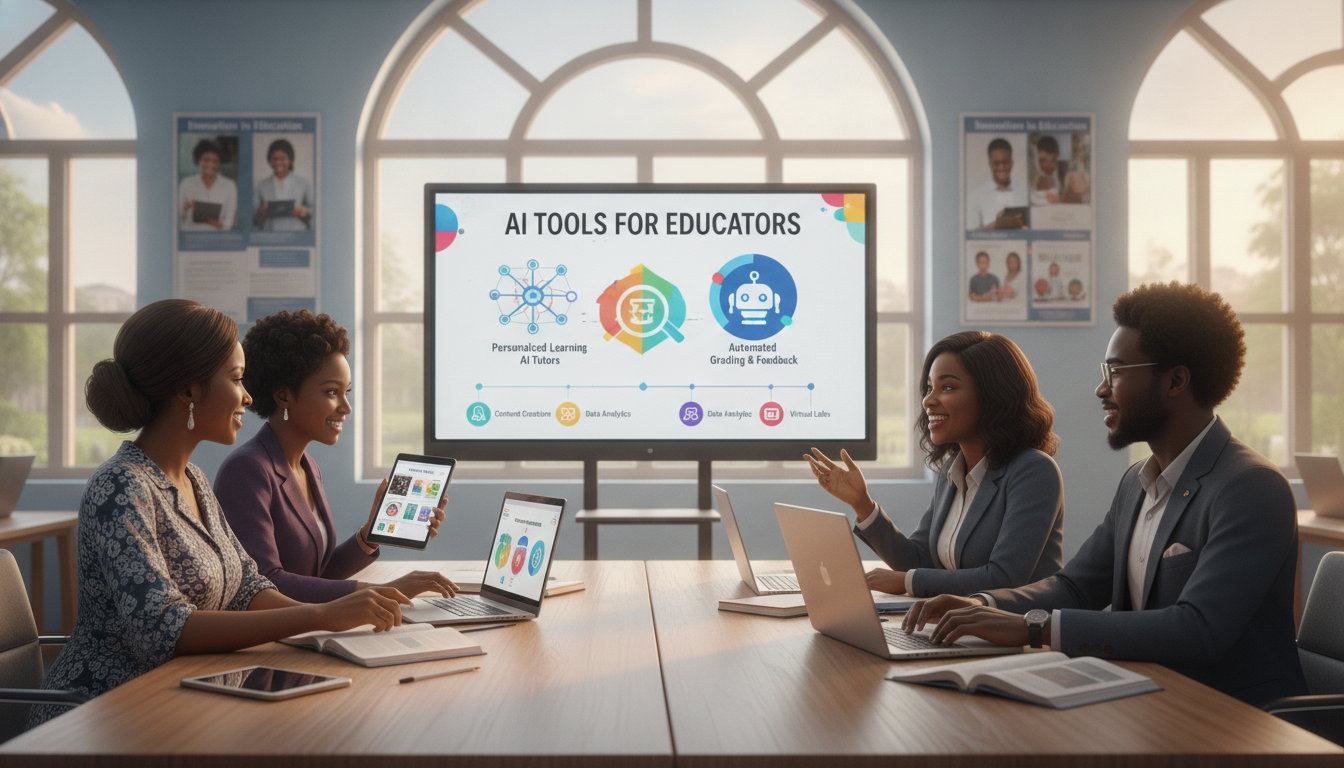
The education scene in Nigeria is changing fast. New digital tools are changing how students learn in class.
In Edo State, a pilot programme showed great results. Students learned as much in six weeks as they would in two years of regular school.
This success shows how technology can help fill gaps in the curriculum. Teachers can use these tools to improve student results all over Nigeria.
This guide helps teachers make the most of AI in their classrooms. It shows how to use advanced software in lessons and support for students.
Key Takeaways
- Edo State trials show that digital tools can accelerate learning by up to two years.
- Technology helps personalise the learning experience for individual pupils.
- Educators can utilise these systems to reduce their administrative workloads.
- Consistent implementation of new software supports better academic results in schools.
- Professional development remains essential for mastering these modern classroom resources.
Assessing the Current Landscape of Educational Technology in Nigeria
The educational scene in Nigeria is changing fast, thanks to digital innovation. Looking at technology in schools shows both big challenges and great chances for growth. Teachers can spot where AI in education can help their students the most.
Identifying Infrastructure Challenges and Opportunities
Many schools struggle with reliable internet and steady power. These issues make it hard to use advanced digital tools. But, they also open doors for creating tools that work well even with little internet.
More schools are turning to mobile learning apps as a solution. By focusing on getting the right hardware, they lay a solid base for future tech growth. This makes it easier to use AI in education across different settings.
The Role of Digital Literacy in Modern Nigerian Classrooms
Digital literacy is key for using technology in schools. Teachers need to know how to use new tools to help their students. Without this knowledge, moving to more complex systems is tough.
Training programmes are now more important than ever to fill this gap. As teachers get better at using technology, they can use AI to boost learning. A digitally savvy team is essential for lasting change in education.
The success of AI in classrooms depends on teachers’ confidence and skills. By encouraging ongoing learning, schools can make technology a powerful tool for success.
Understanding the Fundamentals of AI for Educators
For educators, learning about artificial intelligence is key. As digital tools grow in Nigerian schools, teachers need to understand how they work. This knowledge helps teachers choose the right technology for their students.
Demystifying Natural Language Processing and Machine Learning
Natural language processing is at the heart of many educational tools. It lets computers understand and create human language. This helps teachers grade essays and give feedback quickly.
Machine learning in education makes these tools better over time. It looks at lots of data to find patterns in how students learn. This way, the software can adjust its help to fit each student’s needs.
How AI Tools Function Within an Educational Context
AI tools work by comparing student data to learning models. They give insights that help teachers improve their teaching. This saves time, so teachers can focus on helping students directly.
These technologies are making a difference in local schools. For example, a study in Edo State showed AI helped students do better in English and digital skills. By using machine learning, schools can support students better and help them progress individually.
Step One: Building a Foundation in Digital Skills
Developing strong digital skills is key for teachers wanting to use modern technology. This first step helps teachers move from old ways to new tech in the classroom. It prepares them to use advanced tools.
Accessing Free Online Training Platforms
Many global sites offer top-notch training for teachers. Sites like Coursera, edX, and Google for Education have courses for all levels. They work with big names to give teachers in Nigeria certified courses.
Using these resources, teachers can learn at their own speed. They can keep up with their teaching duties. Courses on AI help teachers see how it can help with school work.
Leveraging Local Professional Development Networks
Local groups are also important for teacher growth. Teachers should join local groups to share and solve problems. These groups hold workshops on using digital skills in Nigerian schools.
Learning from each other is powerful. Joining these groups gives teachers mentors and projects. This makes AI training real and useful for them.
Step Two: Integrating AI Tools for Lesson Planning
Learning new digital skills is essential for modern Nigerian schools. Teachers can use smart software to do less paperwork and more teaching. This change lets them spend more time with students.
Automating Administrative Tasks to Save Time
Teachers often waste hours on tasks like tracking attendance and scheduling. AI can now do these jobs with little help from humans. This saves time for teachers to focus on planning lessons and helping students.

Using Generative AI for Curriculum Design
Generative AI is a great help in making lesson plans. Teachers can set learning goals, and the AI creates detailed plans. This keeps lessons interesting and relevant for all students.
Streamlining Assessment and Grading Processes
Grading lots of assignments can slow teachers down. AI tools now help by giving quick feedback and scoring tests. This makes grading faster and more accurate, helping students get feedback sooner.
Step Three: Implementing AI for Personalised Learning
Educators in Nigeria are finding that AI helps close learning gaps. They now offer support that fits each student’s needs. This change lets students learn at their own speed, understanding complex topics better.
Adapting Content to Diverse Student Needs
AI tools look at how students do to see what they’re good at and what they need to work on. This helps adjust lessons so they’re just right for each learner. It keeps students interested and motivated.
In Edo State, AI made a big difference. Girls who were falling behind caught up quickly. This shows AI can help close the gap between boys and girls in school.
Utilising Adaptive Learning Platforms in Resource-Constrained Environments
Bringing new tech to schools with little resources needs careful planning. Teachers should pick tools that work well even with slow internet or offline. This way, all students get quality learning, no matter where they are.
Using apps that use little data is key. This way, schools can use AI without needing lots of equipment. It helps make sure everyone has a fair chance to learn.
Step Four: Navigating Ethical Considerations and Data Privacy
Ethical standards are key to a successful digital change in Nigerian schools. As AI grows in schools, teachers must grasp its impact. Setting these standards helps create a responsible learning space for all.
Addressing Bias in AI Algorithms
AI systems learn from big datasets that might have biases. If not checked, these biases can unfairly affect students from different backgrounds. Teachers should check the software they use to make sure it’s fair for everyone.
Teachers can reduce these risks by testing tools with different student profiles before using them widely. It’s important to question how an algorithm makes its decisions. This way, teachers can make sure technology is fair for all learners.
Ensuring Student Data Protection in Nigerian Schools
Keeping student data safe is a big responsibility for schools using digital tools. In Nigeria, the Nigeria Data Protection Regulation (NDPR) guides how to handle personal info. Schools must make sure any AI tool they use follows these rules.
Teachers should check that service providers use strong encryption and have clear privacy policies. It’s best to only collect student data when it’s really needed for learning. Following these steps helps build trust with parents and keeps students’ digital info safe.
Step Five: Exploring AI Opportunities for Teachers in Nigeria Through Collaboration
Teaching in the digital age is better with friends and partners. Working together helps spread new tech in schools. Teachers can stay ahead by exploring AI chances.
Joining Communities of Practice for Educators
Teacher groups are great for sharing ideas and solving problems. They help teachers use digital tools in different schools. This way, teachers get better at handling digital challenges.
Being part of these groups leads to better AI training for teachers. Teachers learn together, helping the whole school. This makes learning easier and keeps teachers growing.
Partnering with EdTech Startups in the Nigerian Ecosystem
Nigeria’s schools are seeing new tech thanks to local startups. These companies make tools that fit local classrooms. Teachers get to use tools made just for them.
Working with startups lets teachers shape new software. They can give feedback to make sure tools work well. This is a great way for teachers to find new AI chances and help the curriculum grow.
Overcoming Barriers to AI Adoption in Local Schools
Introducing AI in classrooms in tough conditions needs creative solutions. Despite limited resources, some schools have made great strides. For example, Edo State’s efforts outperformed 80% of other education projects worldwide.
Strategies for Low-Bandwidth Environments
Teachers in areas with bad internet must use tools that work offline. They can use local servers or download content ahead of time. This way, learning can continue without needing fast internet.
Sharing resources among schools helps too. Teachers can share digital materials on physical devices. This creates a strong support network, ensuring students get to use modern tech.
Advocating for Institutional Support and Policy Change
While individual efforts are important, we need big changes for AI in classrooms to stick. Teachers should work with unions and professional groups to push for better digital setups. Together, they can influence policy changes.
It’s also key to have clear rules on data privacy and ethical tech use. Schools need policies that keep everyone safe. With constant pressure, we can make the digital changes needed in Nigeria.
Conclusion
Artificial intelligence is changing the Nigerian classroom. Teachers can now make learning more exciting and focused on students. This prepares students for the fast-changing world ahead.
Using new technology helps students learn better. Even small changes can make a big difference in how well students do. Working together with others in education helps everyone grow.
Changing to digital learning takes time and effort. But every teacher’s contribution makes education stronger. Nigerian schools can be at the forefront of this change with hard work and shared knowledge. The future of learning looks bright for those who are ready to embrace new ideas.

Oke O. Michael (HND, BA, MBA, MSc) is a tech-savvy professional with experience in sales, healthcare, digital marketing, and business development. A skilled editor and passionate web designer, he combines strong technical insight with creative problem-solving to deliver impactful digital and business solutions.