


Why AI Skills for Nigerian Students Define Career Success
Nigerian graduates face intense competition for limited roles: youth unemployment remains a pressing challenge, according to the National Bureau of Statistics. In this environment, technical knowledge alone rarely differentiates candidates; practical AI competencies do.
Employers increasingly value graduates who can apply AI to real problems. A candidate who can automate financial reports or use AI to extract legal precedents stands out in interviews and on job tests. Global remote hiring also expands options: international firms regularly recruit Nigerian talent for AI-related work, creating higher-earning pathways without relocation.
The good news is that building these skills is achievable while you study. Many training resources and tools offer free tiers or student access, so focused practice over a few months rather than additional degrees can place you ahead in the job market. The numbered list below shows practical steps and tools to start learning in Nigeria today.
2. Advanced Prompt Engineering: Making AI Work for You
Prompt engineering is one of the fastest, most practical AI skills Nigerian students can learn. It means writing precise instructions so generative models produce useful, verifiable outputs from polished essays to working code and data summaries.
Think of prompts as briefing a very capable but literal assistant: the clearer your brief, the better the result. Mastering a few simple frameworks improves output quality dramatically.

Core frameworks (quick)
– Role-prompting: set the persona and audience. Example: “You are an economics lecturer. Explain currency devaluation to undergraduates.”
– Few-shot prompting: show 2–3 examples of the format you want, then ask for a new item in that style.
– Chain-of-thought: ask the model to “show its working” or “think step-by-step” for complex analysis or debugging.
Tools to start with (one-line each)
ChatGPT (OpenAI)
Great for brainstorming, drafting and iterative refinement, use the free tier for practice and to learn prompt patterns.
Claude (Anthropic)
Better for sustained, long-form analysis and multi-document reviews; try it when your project spans many pages.
Gemini (Google)
Useful for real-time web-aware answers and quick fact-checking; link it to Google Docs/Sheets for smoother workflows.
How to practise (30-minute routine)
– 5 minutes: pick a small task (summarise one lecture slide or a short article).
– 15 minutes: craft 3 prompt variants (role, few-shot, chain-of-thought) and compare outputs.
– 5 minutes: verify facts or dates using a reliable source (e.g., official websites, NBS, WHO).
– 5 minutes: refine the best prompt and save it to a personal prompt library for reuse.
Two short use cases
– Law student: ask Claude to compare five Supreme Court judgments, then prompt for a one-page synthesis emphasising precedents relevant to contract disputes.
– Engineering student: ask ChatGPT for a step-by-step explanation of a thermodynamics problem using local examples, then request three practice questions with solutions.
Notes: check tool availability and feature limits for student accounts in your region; when accuracy matters, always cross‑verify AI outputs with primary sources.
3. Data Literacy and Analytics: Reading the Numbers That Matter
Data literacy, the ability to collect, clean, organise and interpret information using AI-enabled tools, is now essential across disciplines. Whether you study accounting, sociology, biochemistry or marketing, the skill to turn raw numbers into clear insights separates competent graduates from exceptional hires.
AI models depend on quality data. Students who can ask the right questions of datasets and verify results control the insights AI produces; those who cannot remain dependent on others’ interpretations.

Three practical steps to start
– Excel basics: master pivot tables, lookup functions and basic statistics. Most Nigerian employers expect Excel fluency.
– AI-assisted analysis: use ChatGPT (or similar) to generate analysis code, spot correlations and draft plain‑language summaries from spreadsheet data.
– Dashboard storytelling: convert findings into a simple interactive dashboard (Power BI or Google Sheets) and produce one-slide recommendations that non-technical stakeholders can act on.
Tools and how to use them (quick)
Microsoft Excel & Google Sheets
Excel remains the corporate standard; Google Sheets is excellent for collaboration. Learn formulas, pivot tables and charts. Use Sheets’ Explore and Excel Copilot (where available) to speed up analysis.

ChatGPT for data analysis
With the appropriate plan, upload spreadsheets or paste samples and ask for correlations, outlier detection or Python snippets. Use the output as a learning scaffold. Always inspect and validate the results.
Microsoft Power BI
Power BI Desktop is free and ideal for turning messy tables into interactive dashboards. A polished dashboard for a final-year project impresses examiners and employers alike.
Two quick micro-exercises (do this week)
1) Take any course dataset (assignment marks or a simple survey). Create a pivot table, one chart and write one sentence that interprets the main trend.
2) Upload a small CSV to ChatGPT (or paste rows). Ask for three correlations and a suggested visualisation; then build the chart in Sheets or Power BI.
Ethics note: always cite data sources, anonymise personal information and check permissions before sharing datasets. Responsible data practice is as important as technical skill.
4. Basic Python and No-Code Automation: Work Smarter, Not Harder
Automation removes repetitive tasks that employers dislike and frees time for higher-value work. You can get results two ways: learn basic Python or use no-code workflow tools, both deliver practical savings and portfolio-ready projects.
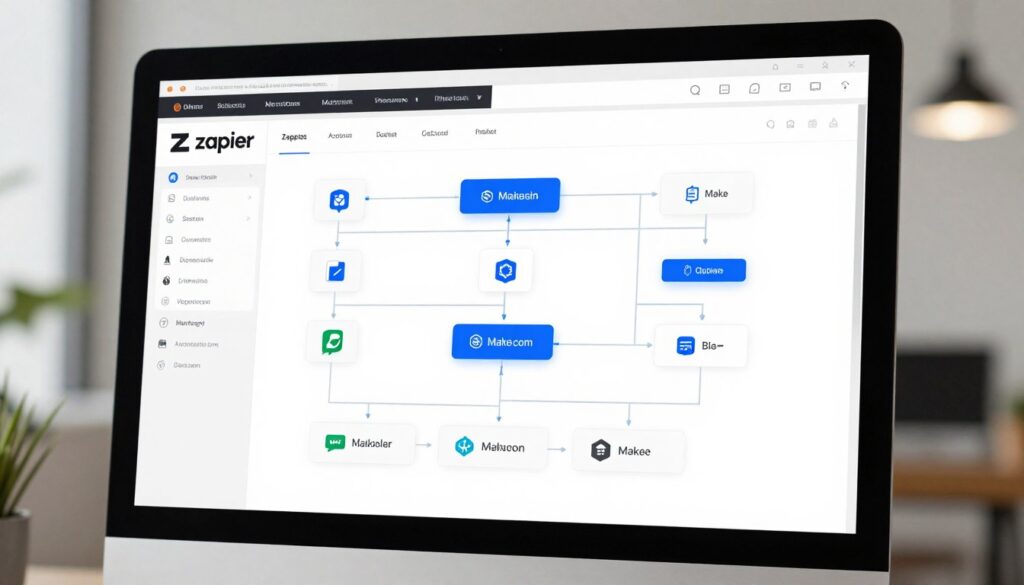
No-code automation (fast wins)
No-code platforms like Zapier and Make.com connect apps visually so you drag, drop and configure rather than write code. They handle many common automation needs, ideal for students who want quick productivity gains.
Practical examples to try: automatically save email attachments to Google Drive; move form responses into a spreadsheet; post scheduled updates across social channels; send automated reminders to group members.
Start on a free tier, document the workflow screenshots, and include the before/after time-savings in your portfolio to show employers practical impact.
Python for deeper automation (more control)
Python is readable, widely used and excellent for tasks that no visual tool handles easily. Use Replit or a local install to practise. Describe the task to an AI assistant (GitHub Copilot or ChatGPT) and let it scaffold code while you learn.
Begin with tiny scripts: rename files in bulk, merge CSVs, send personalised emails, or generate a weekly report. Example pseudocode idea: read CSV → filter rows – save results. (Keep snippets short and well-documented in your repo.)
- Choose one path this week: Zapier/M ake for no-code, or Replit + Python for coding.
- Complete one micro-project (see below) and publish it with a clear README on GitHub.
- Use AI virtual assistants (Copilot/ChatGPT) to explain code and fix errors while you learn.
- Describe the problem, the automation steps, and the measurable time saved in your portfolio.
Micro-projects you can finish in days
– Meeting minutes automation: build a workflow that extracts action items from notes and emails them to team members.
– Student finance helper: combine class attendance or marks from multiple sheets into one summary report.
– Farm alert (no-code): connect a weather API to WhatsApp (via a webhook) that notifies a group when the rain chance exceeds a chosen threshold.
How to showcase your work
Put projects on GitHub with a short README explaining the problem, your solution, commands to run (or screenshots for no-code), and impact (time saved or processes simplified). Employers value clear documentation as much as working code.
Practical tip: keep each project small and focused. Two or three well-documented projects trump an unfinished monolith when recruiters review your profile.
5. AI-Powered Research and Literature Review: Academic Excellence Accelerated
Final-year projects and dissertations demand broad, accurate literature reviews — tasks that traditionally take weeks. AI research tools compress discovery, summarisation and synthesis into days, helping you find relevant studies, understand methodologies and spot gaps faster.
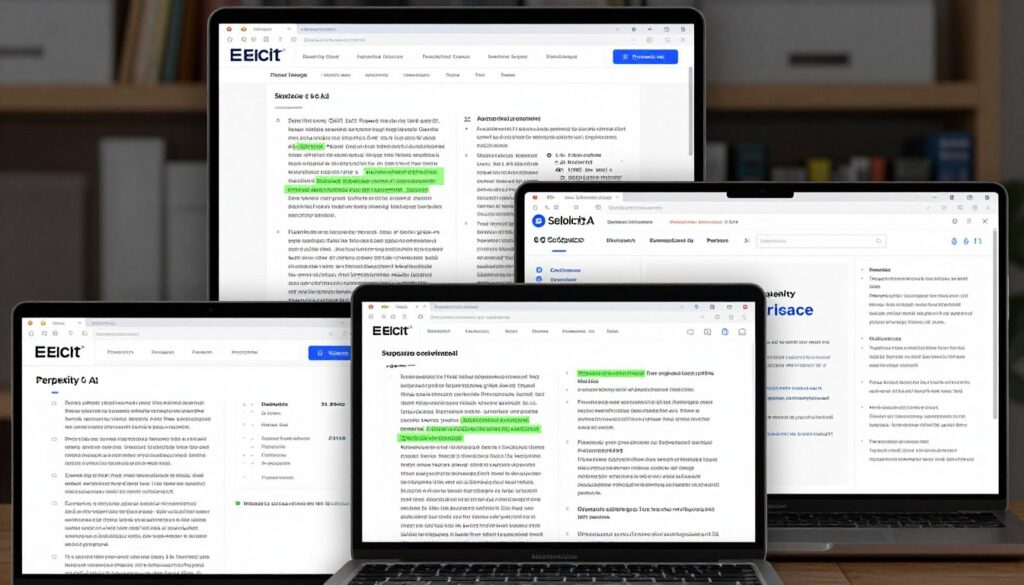
Recommended tools & quick use
– Elicit: ask focused questions (e.g. “interventions to reduce maternal mortality in sub‑Saharan Africa”) and receive synthesised findings with citations — ideal for mapping the research landscape quickly.
– SciSpace: upload a PDF and get plain‑English explanations of dense sections, figures and formulas so you can grasp methods you’d otherwise struggle with.
– Perplexity AI: use it as a verification step – its conversational answers include source links you can open and check, reducing the risk of unverified claims.
Two-week mini-project (practical)
Week 1: Use Elicit to gather and shortlist 10–15 papers on a narrow topic; read abstracts and save PDFs.
Week 2: Upload 3 key PDFs to SciSpace for detailed breakdowns, then write a 1,000-word synthesis citing at least two primary sources and one official dataset (e.g., NBS).
Quick example: a student using Elicit can find recent studies on antimicrobial resistance patterns in Nigerian hospitals; SciSpace helps explain methods, and Perplexity links to official health reports to verify prevalence figures.
Verification and ethics
AI accelerates discovery but does not replace critical thinking. Always cross‑verify citations, check publication dates and consult sources (NBS, WHO, UNESCO) for authoritative data. Respect copyright and anonymise any sensitive data before sharing.
Practical tip: save your search prompts and tool outputs as part of your project appendix, which documents your method and demonstrates careful, reproducible research to examiners or employers.
6. Human-Centric Communication: Your Irreplaceable Advantage
AI can produce analyses and reports, but humans interpret meaning and build relationships. Strong communication, clear explanations, emotional intelligence and cultural awareness turn technical work into business value and advance your career.
Why this matters
Technical skills get you an interview; communication skills get you promoted. In Nigerian workplaces that span cultures and backgrounds, the ability to explain AI outputs to non-technical stakeholders, negotiate priorities and build trust is highly prized.
Three short actions to improve this month
– Join one campus group (debating society, student government or a professional association) and volunteer to speak at one meeting.
– Record a two‑minute explanation of a recent project (audio or video). Use a tool like Poised or Yoodli for a 5‑minute practice run and review the feedback.
– After any presentation, ask for three specific pieces of feedback: clarity of the main point, pacing, and confusing terms, then apply one change next time.
Poised: AI communication coach
Poised analyses speech in video calls, highlighting pace, filler words and confidence. Use it for private practice and track improvement over time.
Yoodli: Presentation feedback platform
Yoodli helps with interview answers and presentation structure, giving real-time tips on word choice and non-verbal cues useful for competitive applications and remote roles.
Cultural intelligence
Work with peers from different backgrounds, follow international business norms, and practice adapting your tone and examples for diverse audiences. This adaptability, combined with AI skills, makes you effective in both local roles and global remote teams.
Practical tip: keep a short “audience checklist” before each talk, who they are, what they value, which jargon to avoid and use it to shape your explanation.
7. Building AI Skills During Your Nigerian University Experience
Knowing which AI skills matter is only useful if you develop them. Nigerian undergraduates face constraints—limited campus resources, irregular power and costly data, so they adopt low-cost, offline-first strategies and a focused learning plan.
Maximise free resources
World-class training is available online: Coursera, edX and Microsoft Learn offer free courses or audit options. Download lectures and readings when you have campus Wi‑Fi to save mobile data for practice sessions. Free tiers of tools (ChatGPT, Claude, Gemini, Google Sheets, Replit) let you start immediately.
Compact 12‑month plan with micro‑tasks
- Month 1–2: Prompt engineering – Daily 30‑minute practice with ChatGPT: craft three prompt variants, save the best prompt to a personal library. (Micro-task: create one prompt that turns a lecture slide into a 300‑word summary.)
- Month 3–4: Data basics – Learn pivot tables and charts in Excel/Sheets. (Micro-task: produce one pivot table + chart from course marks and write a one-sentence insight.)
- Month 5–6: Automation – Try a no‑code Zapier workflow or a simple Python script on Replit. (Micro-task: automate saving email attachments to Drive or merge two CSVs.)
- Month 7–8: Research tools – Use Elicit and SciSpace for literature searches. (Micro-task: produce a 1,000‑word synthesis citing at least two primary sources.)
- Month 9–12: Communication & portfolio – Record short presentations, use Poised/Yoodli for feedback and publish 2–3 projects on GitHub or a simple website.
Sample weekly schedule (low‑bandwidth)
– Monday (30 min): prompt practice or quick Excel task (offline where possible).
– Wednesday (30 min): read downloaded lecture or paper; save notes.
– Saturday (60 min): hands-on tool work (Replit, Power BI Desktop or Zapier) while on campus Wi‑Fi.
Build a portfolio that proves impact
Employers want outcomes, not claims. For each project, include: problem statement, your solution (screenshots or code), commands to run or workflow steps, and measurable impact (time saved, clarity improved). Host code on GitHub, link projects on LinkedIn, and use a simple WordPress or GitHub Pages site as your showcase.
Leverage campus support
Use university labs during reliable power windows, form study groups for peer learning, and ask lecturers for mentorship; many are willing to support practical projects. If you want to learn more through structured training, look for local workshops and Microsoft’s national training initiatives as potential support routes.
Start learning today: complete the Month 1 micro‑task this week and save the result to your portfolio.
8. Overcoming Common Challenges for Nigerian Students Learning AI
Learning AI while juggling coursework and limited resources is possible with practical strategies and a steady mindset. Focus on small, repeatable actions and peer support to sustain progress.
Manage limited internet access (quick wins)
- Download lectures, PDFs and course materials when on campus Wi‑Fi and save them for offline study.
- Use lightweight mobile apps or text-based interfaces where available; avoid streaming when you only need transcripts or slides.
- Reserve hands‑on tool work (Replit, Power BI Desktop uploads) for scheduled campus sessions with reliable connectivity.
Integrate AI learning with coursework
- Apply skills to existing assignments: use prompt engineering to summarise readings, apply Excel or Power BI to analyse lab data, and document the results in your project report.
- Micro-action: schedule 30 minutes daily for skill practice — e.g. Monday prompt craft, Wednesday Excel task, Saturday hands‑on project.
- Form a study pair or small group to share downloads, split readings and peer-review each other’s outputs.
Beat impostor syndrome and get support
- Remember that consistent small wins matter more than perfection; AI tools level many resource gaps.
- Ask for feedback after every presentation or project and track improvements; visible progress builds confidence.
- Seek mentorship from a lecturer or senior student — peer support is one of the most effective training routes in Nigeria.
Start learning today: download one lecture for offline review and schedule your first 30‑minute practice session this week.
9. Where These AI Skills Lead: Career Opportunities for Nigerian Graduates
The AI competencies you build in university open three clear pathways: industry roles, global remote jobs and entrepreneurship. Each path rewards different combinations of technical skills, communication and practical project experience.

1) Industry roles — many options
Finance, healthcare, marketing, tech and consulting hire graduates who can apply AI to business problems: automate reports, analyse transaction patterns, interpret clinical models, optimise campaigns or advise on digital transformation. Action steps: (a) tailor one course project to an industry problem; (b) include measurable outcomes in your portfolio.
2) Global remote opportunities
International employers increasingly recruit Nigerian talent for remote roles in data analysis, prompt engineering, research and product support. These positions often pay substantially above local salaries and let you work from anywhere in Nigeria. Action steps: (a) build a LinkedIn profile highlighting projects and outcomes; (b) search platforms like Remote.co, We Work Remotely, and AngelList for entry roles.
3) Entrepreneurship and side projects
AI lowers the cost of starting a business. Students launch services such as automated bookkeeping, farm advisory tools using weather and ML, personalised tutoring platforms or content services using generative AI. Action steps: (a) validate a simple idea with one pilot customer; (b) scale slowly and document impact for customers in your portfolio.
Employers and customers look for demonstrable impact. Whether you pursue a job or build a business, focus on small, measurable projects that show how your skills solve real problems in the Nigerian market.
Your AI-Enabled Future Starts Today
The five skills above — prompt engineering, data literacy, automation, AI-powered research and human-centred communication — form a practical foundation for career success in Nigeria’s changing job market. These are not extras for computer scientists; they are core skills employers now expect.
You do not need expensive programmes to begin. Free courses, online training resources and tool-free tiers let you start learning and building projects immediately. Consistent practice over months, not years, produces measurable gains in employability and career options.
Start with three simple actions this week:
- Practice one prompt in ChatGPT today: turn a lecture slide into a 300‑word summary.
- Create one pivot table or chart in Excel or Google Sheets this week and write a one‑sentence insight.
- Publish a small project (code, workflow screenshots or a write‑up) to GitHub or LinkedIn this month.
Small, repeated efforts compound into a real advantage by graduation. Use university labs, peer support and available training programmes for guidance and support as you learn. The opportunities for better careers, global remote roles and entrepreneurial options are already opening for graduates who combine subject knowledge with practical AI skills.
Make the choice today: start learning, build projects, and let your degree and AI skills work together to shape your career.

Oke O. Michael (HND, BA, MBA, MSc) is a tech-savvy professional with experience in sales, healthcare, digital marketing, and business development. A skilled editor and passionate web designer, he combines strong technical insight with creative problem-solving to deliver impactful digital and business solutions.