


Artificial intelligence is reshaping the Nigerian job market at an unprecedented pace. From Lagos tech startups deploying machine learning algorithms to Abuja financial services firms implementing AI-powered chatbots, the transformation is visible across every sector. For Nigerian workers, students, and professionals, understanding this shift isn’t merely academic—it’s essential for career survival and growth.
The impact extends beyond simple automation. AI is creating entirely new roles whilst displacing others, demanding fresh skills, and fundamentally altering how businesses operate. This comprehensive analysis examines both the challenges and opportunities that artificial intelligence presents for Nigeria’s workforce.
The Current State of AI Adoption in Nigeria
Nigeria’s artificial intelligence landscape has evolved significantly over the past five years. The technology sector has witnessed substantial investment, with both local startups and international companies establishing AI-focused operations across major cities.
Government initiatives have accelerated this adoption. The National Information Technology Development Agency has partnered with global tech firms to expand AI education. Microsoft’s recent commitment to training 350,000 Nigerians in AI skills represents a watershed moment for the country’s digital transformation strategy.
Major industries are integrating intelligent systems into their operations. Banks have deployed chatbots for customer service, reducing response times from hours to seconds. Agricultural technology companies use machine learning to predict crop yields and optimise farming practices. Healthcare providers employ AI diagnostic tools to improve patient outcomes in underserved areas.
The demand for AI expertise has created a competitive market. Tech professionals with machine learning knowledge command premium salaries, whilst companies struggle to fill specialised roles. This skills gap presents both a challenge and an opportunity for Nigerian workers willing to invest in their education and development.
Which Jobs Face the Highest Displacement Risk?
Certain roles face significant disruption from automation and artificial intelligence. Understanding these vulnerable positions helps workers prepare and adapt before displacement occurs.
Customer Service and Support Roles
AI-powered chatbots have transformed customer service across Nigerian businesses. Banks like GTBank and Access Bank have implemented automated systems that handle routine enquiries, password resets, and account balance checks without human intervention. These systems operate 24 hours daily, processing thousands of interactions simultaneously.

A customer service representative at a Lagos telecommunications company shared her experience: “Three years ago, our team had 45 agents. Today, we’re down to 12. The chatbot handles everything from billing questions to service activations. We only step in for complex complaints.”
This sector demonstrates how AI affects jobs through gradual replacement rather than sudden elimination. Companies typically reduce hiring rather than conducting mass layoffs, allowing natural attrition to shrink teams.
Data Entry and Administrative Tasks
Routine administrative work faces substantial automation pressure. Intelligent systems now extract information from documents, populate databases, and generate reports with minimal human oversight. Financial services firms have particularly embraced this technology.
Machine learning algorithms process loan applications, verify customer information, and flag anomalies faster than human workers. A Port Harcourt microfinance bank reduced its data entry team from 20 to 5 employees after implementing automated document processing. The remaining staff now focus on exception handling and quality assurance.
Manufacturing and Assembly Line Workers
Nigerian manufacturing facilities are gradually introducing robotics and automation. Whilst the adoption rate remains slower than in developed economies, the trajectory is clear. Factories producing consumer goods, beverages, and automotive parts have begun integrating intelligent systems.
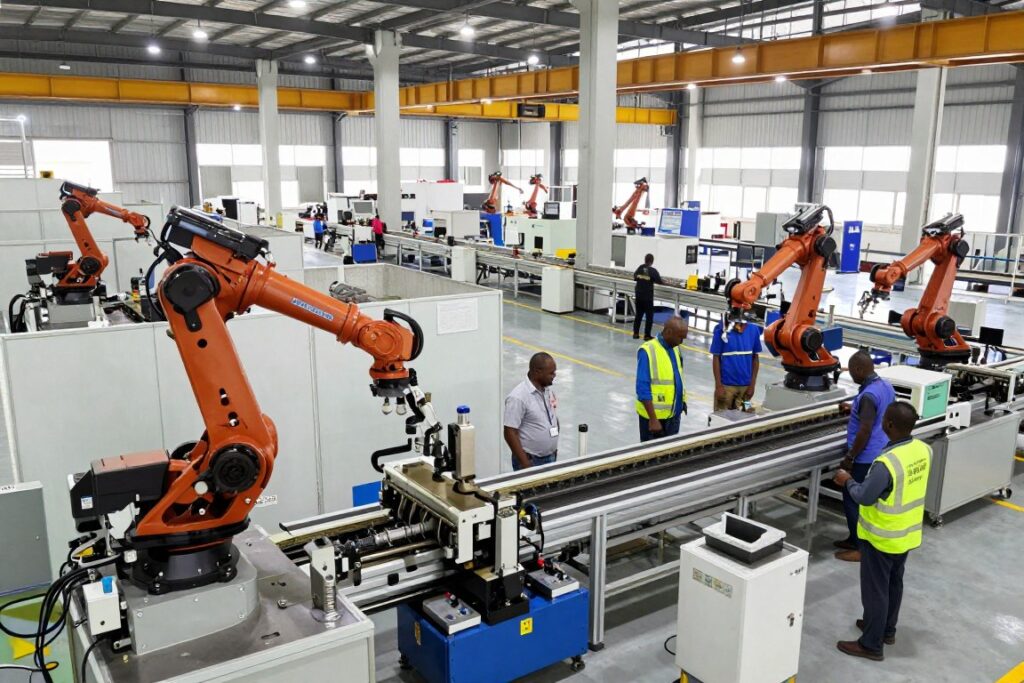
A beverage production facility in Ogun State installed automated bottling lines that increased output by 200% whilst reducing the workforce by 40%. The company retained workers who demonstrated aptitude for machine operation and maintenance, providing them with technical training.
Basic Accounting and Bookkeeping
Artificial intelligence has revolutionised financial record-keeping. Software platforms now automatically categorise transactions, reconcile accounts, and generate financial statements. Small businesses that previously employed bookkeepers now use cloud-based accounting systems with AI features.
However, this displacement has created new demand for financial advisors who interpret data and provide strategic guidance. The role has evolved rather than disappeared, requiring different skills and knowledge.
Roles with High Automation Potential
- Routine customer service positions
- Data entry and document processing roles
- Basic bookkeeping and accounting tasks
- Assembly line manufacturing positions
- Repetitive administrative work
- Simple content moderation jobs
Factors Slowing Displacement
- High implementation costs for AI systems
- Infrastructure limitations in some regions
- Regulatory requirements for human oversight
- Cultural preferences for human interaction
- Complexity of certain Nigerian business processes
- Skills gap in AI system maintenance
New Job Opportunities Created by AI
Whilst artificial intelligence eliminates certain roles, it simultaneously creates numerous new jobs. These positions often offer better compensation and career growth prospects than the jobs they replace.
AI Specialists and Machine Learning Engineers
The demand for professionals who can develop, implement, and maintain AI systems has exploded. Nigerian companies actively recruit machine learning engineers, data scientists, and AI researchers. Salaries for these roles often exceed ₦10 million annually for experienced professionals.

Andela, the Nigerian tech talent company, has trained hundreds of developers in artificial intelligence and machine learning. Many graduates secure positions with international firms whilst remaining based in Nigeria. For those interested in this career trajectory, practical steps for getting into AI engineering in Nigeria provide valuable guidance.
Data Analysts and Business Intelligence Professionals
Every organisation implementing AI generates vast amounts of data requiring analysis and interpretation. Data analysts transform raw information into actionable insights that drive business decisions. This role bridges technology and strategy, making it valuable across industries.
A data analyst at a Lagos e-commerce company explained: “I help management understand customer behaviour patterns that our AI systems identify. The machine learning algorithms detect trends, but humans decide how to respond strategically.”
Nigerian students and professionals seeking to develop these capabilities should explore essential AI skills for Nigerian students that employers actively seek.
AI Ethics Officers and Compliance Specialists
As artificial intelligence becomes more prevalent, organisations need professionals who ensure ethical implementation and regulatory compliance. These roles involve reviewing AI systems for bias, ensuring data privacy, and maintaining transparency in automated decision-making.
The Nigerian government has begun developing AI governance frameworks, creating demand for compliance experts who understand both technology and regulation. This emerging field offers substantial growth potential as AI adoption accelerates.
AI Trainers and Annotators
Machine learning systems require human guidance to learn effectively. AI trainers and data annotators label information, correct errors, and improve algorithm accuracy. This work is particularly important for developing systems that understand Nigerian languages, contexts, and cultural nuances.
Several Lagos-based startups employ teams of annotators who train AI models for local applications. These entry-level positions provide pathways into the technology sector for individuals without traditional tech backgrounds.
Robotics Maintenance Technicians
As manufacturing facilities deploy automated systems, they require technicians who can maintain, repair, and optimise robotic equipment. This skilled trade combines mechanical knowledge with digital literacy, offering stable employment prospects.
Technical colleges across Nigeria have begun offering robotics programmes to meet this growing demand. These vocational pathways provide alternatives to traditional university education whilst addressing real market needs.
Growth Sectors: The Nigerian AI job market is expanding fastest in financial services, healthcare technology, agricultural innovation, education technology, and telecommunications. These industries are actively hiring across multiple skill levels, from entry positions to senior specialists. Professionals exploring these opportunities may benefit from understanding AI career paths available for Nigerians.
Essential Skills for Thriving in the AI-Driven Job Market
Success in Nigeria’s evolving job market requires a combination of technical knowledge and human-centric abilities. Workers who develop these skills position themselves advantageously regardless of their industry.
Technical Skills and Digital Literacy
Basic programming knowledge has become increasingly valuable across professions. Understanding how AI systems function—even without deep technical expertise—helps professionals collaborate effectively with technology teams and adapt to workplace changes.

Python, the programming language most commonly used for machine learning, has become particularly relevant. Free online courses from platforms like Coursera and edX make this knowledge accessible. Nigerian professionals who invest 3-6 months in structured learning can develop foundational competency.
Data literacy represents another crucial skill. The ability to interpret statistics, understand visualisations, and draw conclusions from data proves valuable in roles from marketing to operations management. This capability doesn’t require advanced mathematics but does demand logical thinking and attention to detail.
Critical Thinking and Complex Problem-Solving
Artificial intelligence excels at routine tasks but struggles with nuanced problems requiring contextual understanding. Humans who can analyse complex situations, consider multiple perspectives, and devise creative solutions remain indispensable.
A Lagos consulting firm partner observed: “We use AI tools for data analysis and research, but strategy development still requires human judgement. Clients pay for insight and wisdom, not just information processing.”
Developing critical thinking involves questioning assumptions, evaluating evidence, and considering consequences. These skills strengthen through practice, debate, and exposure to diverse viewpoints. Nigerian professionals should actively seek opportunities to tackle ambiguous challenges in their current roles.
Emotional Intelligence and Interpersonal Skills
As machines handle technical tasks, uniquely human abilities become more valuable. Emotional intelligence—the capacity to understand and manage emotions in oneself and others—cannot be replicated by artificial intelligence.
Sales professionals, managers, counsellors, and educators rely heavily on emotional intelligence. These roles require reading social cues, building trust, and navigating interpersonal dynamics—capabilities that remain firmly in the human domain. Those looking to strengthen these capabilities should review essential transferable AI soft skills every Nigerian graduate must have.
Adaptability and Continuous Learning
The pace of technological change means that specific technical skills become outdated quickly. The meta-skill of learning itself—the ability to acquire new knowledge and adapt to changing circumstances—provides lasting value.
Nigerian workers should cultivate a growth mindset, viewing challenges as learning opportunities rather than threats. This perspective transforms AI-driven workplace changes from existential risks into chances for professional development.
Accessing quality education has never been easier. Numerous organisations offer free AI certifications recognized in Nigeria, enabling professionals to build credentials without financial barriers.
| Skill Category | Specific Competencies | Development Time | Market Demand Level |
| Programming & Development | Python, JavaScript, SQL, Machine Learning basics | 6-12 months | Very High |
| Data Analysis | Statistical analysis, Data visualisation, Excel/Power BI | 3-6 months | High |
| AI System Interaction | Prompt engineering, AI tool proficiency, Workflow automation | 1-3 months | Rapidly Growing |
| Digital Marketing | AI-assisted content creation, Analytics interpretation, SEO | 3-6 months | High |
| Project Management | Agile methodologies, Tech project oversight, Cross-functional collaboration | 6-9 months | Moderate-High |
How AI is Transforming Specific Nigerian Industries
The impact of artificial intelligence varies significantly across different sectors of Nigeria’s economy. Understanding these industry-specific changes helps workers and businesses prepare effectively.
Financial Services and Banking
Nigerian banks have embraced AI more aggressively than most other industries. Machine learning algorithms now assess credit risk, detect fraudulent transactions, and personalise customer experiences. The adoption has improved efficiency whilst reducing costs substantially.

Traditional banking roles have evolved rather than disappeared entirely. Relationship managers now spend less time on paperwork and more on advisory services. Branch staff focus on complex problems whilst routine transactions happen through automated channels. This shift has raised the skill requirements for financial services positions.
Fintech startups have particularly leveraged AI to compete with established banks. Companies like Flutterwave and Paystack use intelligent systems to streamline payment processing and prevent fraud. These firms create numerous technology jobs whilst disrupting traditional banking employment models.
Healthcare and Medical Services
Artificial intelligence is addressing critical challenges in Nigeria’s healthcare sector. Diagnostic tools powered by machine learning help medical professionals identify diseases earlier and more accurately. In regions with physician shortages, AI systems provide preliminary assessments that guide treatment decisions.
A teaching hospital in Ibadan implemented an AI diagnostic system that analyses medical images for tuberculosis and pneumonia. The technology enables radiologists to review more cases daily whilst improving diagnostic accuracy. Rather than replacing doctors, the system augments their capabilities.

Telemedicine platforms incorporating AI chatbots have expanded healthcare access in rural areas. Patients receive initial consultations through automated systems before connecting with human practitioners for complex issues. This tiered approach maximises scarce medical expertise whilst serving more patients.
The healthcare sector demonstrates how artificial intelligence creates new roles whilst transforming existing ones. Medical AI specialists, health informatics analysts, and telemedicine coordinators represent emerging career opportunities that didn’t exist five years ago.
Agriculture and Agribusiness
Nigerian agriculture is experiencing a technological revolution driven by artificial intelligence and machine learning. Farmers now access AI-powered advisory services through mobile applications that provide personalised recommendations for planting, irrigation, and pest control.
A rice farmer in Kebbi State described his experience: “The AI app analyses weather patterns and soil conditions, then tells me the optimal planting time. My yields increased by 30% last season just from following these recommendations. I don’t need to understand the technology—I just need to use the advice.”
Agritech startups like Farmcrowdy and Thrive Agric use machine learning to connect farmers with resources, predict market prices, and optimise supply chains. These innovations create jobs for agricultural data analysts, remote sensing specialists, and digital extension officers.
Education and Training
The education sector faces both disruption and opportunity from AI technology. Intelligent tutoring systems personalise learning experiences, adapting content difficulty to individual student needs. These platforms have proved particularly valuable during periods of school closure.

However, the role of teachers remains central. Educators now focus more on mentoring, critical thinking development, and social-emotional learning—areas where human interaction proves irreplaceable. AI handles routine administrative tasks like grading and attendance tracking, freeing teachers for higher-value activities.
The Nigerian government’s partnership with Microsoft to train 350,000 people in AI skills represents a massive investment in education and workforce development. This initiative recognises that preparing citizens for an AI-driven economy requires systematic knowledge transfer. Details about this programme are available through Nigeria’s efforts to expand its AI talent pool with Microsoft training.
Manufacturing and Production
Nigerian manufacturing faces pressure from global competition and local cost challenges. Automation offers a path to improved efficiency and quality control. Companies in sectors ranging from textiles to food processing have begun deploying intelligent systems.
A cement manufacturer in Ogun State reduced defect rates by 40% after implementing AI-powered quality control systems. Cameras equipped with machine learning algorithms inspect products continuously, identifying flaws that human inspectors might miss due to fatigue or attention lapses.
The transition creates demand for industrial automation specialists, robotics technicians, and process optimisation engineers. Workers who develop these technical skills find abundant opportunities as manufacturing modernises.
Government Initiatives and Policy Responses
Nigerian government agencies have recognised the strategic importance of artificial intelligence for national development. Multiple initiatives aim to prepare the workforce for technological transformation whilst encouraging innovation.
National AI Strategy and Framework
The Federal Ministry of Communications and Digital Economy has developed a national artificial intelligence strategy addressing workforce development, research funding, and ethical guidelines. This framework recognises that AI represents both an economic opportunity and a potential source of social disruption.
Key elements include investment in STEM education, support for AI research centres, and partnerships with technology companies. The strategy emphasises inclusive growth, ensuring that AI benefits reach beyond Lagos and Abuja to other regions.
Educational Reforms and Training Programmes
Universities across Nigeria have introduced AI-related courses and degree programmes. The Nigerian University Commission has provided guidance on curriculum development, ensuring that educational offerings align with industry needs.
Technical and vocational education institutions have similarly adapted their programmes. TVET colleges now offer certificates in data analysis, robotics maintenance, and digital skills—preparing students for practical roles in the AI economy.
The government has partnered with international organisations to expand access to training. Programmes targeting women and young people aim to ensure that technology benefits are broadly distributed rather than concentrated among existing elites.
Support for Technology Startups and Innovation
Government initiatives like the Nigeria Startup Act provide legal frameworks and incentives for technology companies. These policies reduce barriers to business formation and attract investment into the AI sector.
Innovation hubs in major cities receive government support, providing workspace, mentorship, and funding connections for early-stage companies. These centres have become crucial components of Nigeria’s technology ecosystem, nurturing startups that create jobs and develop solutions for local challenges.
The government’s role extends beyond direct support to creating enabling environments. Improvements in electricity infrastructure, internet connectivity, and regulatory frameworks all contribute to AI adoption and the job opportunities it creates.
Practical Steps to Prepare for AI-Driven Changes
Nigerian workers can take concrete actions today to position themselves advantageously in the evolving job market. These steps apply whether you’re a student, early-career professional, or experienced worker.
Assess Your Current Role’s Automation Risk
Begin by honestly evaluating your job’s vulnerability to automation. Roles involving repetitive tasks, rule-based decisions, and predictable environments face higher risk. Positions requiring creativity, complex problem-solving, and human interaction are more secure.
Consider what percentage of your daily tasks could theoretically be automated with existing technology. If the answer exceeds 50%, developing new skills should become a priority. This assessment isn’t meant to cause panic but to motivate proactive preparation.
Questions to Consider
- Does my role involve mostly repetitive tasks?
- Could a computer follow rules to complete my work?
- Do I primarily handle routine customer queries?
- Is my decision-making process standardised?
- Could my tasks be described in a simple flowchart?
Protective Factors
- My role requires creative problem-solving
- I manage complex stakeholder relationships
- My work involves nuanced judgement calls
- I need deep contextual understanding
- Human interaction is central to my position
- My expertise comes from years of experience
Invest in Continuous Learning and Skill Development
Allocate regular time—even just 5 hours weekly—to learning relevant skills. Online platforms offer structured courses in programming, data analysis, digital marketing, and AI fundamentals. Many provide free options alongside paid certificates.
Start with foundational knowledge before advancing to specialised topics. A marketing professional might begin with basic data analysis before progressing to machine learning applications in customer segmentation. This staged approach builds confidence whilst developing practical competence.
Practical experience matters as much as theoretical knowledge. Apply new skills in your current role, even in small ways. Volunteer for projects involving new technology. Build a portfolio demonstrating your capabilities to future employers.
Build Your Professional Network
Connect with professionals working in AI and technology fields. Attend industry meetups, join online communities, and participate in professional associations. These relationships provide insights into emerging trends and job opportunities before they become widely known.
Lagos, Abuja, and Port Harcourt host regular technology events where professionals share knowledge and make connections. Virtual communities on platforms like LinkedIn and Slack offer networking opportunities regardless of location.
Don’t limit networking to your immediate field. Cross-disciplinary connections often prove most valuable, exposing you to different perspectives and opportunities. The accountant who networks with software developers gains insights that purely finance-focused colleagues miss.
Develop a Personal Brand and Online Presence
In an AI-driven economy, your digital footprint increasingly matters for career advancement. Create profiles on professional platforms showcasing your skills, projects, and expertise. Share insights related to your field through blog posts, LinkedIn articles, or Twitter threads.
This visibility serves multiple purposes: demonstrating knowledge to potential employers, building credibility in your field, and creating opportunities through inbound enquiries. Consistency matters more than perfection—regular, valuable contributions outweigh occasional viral posts.
Stay Informed About Industry Trends
Follow reputable sources covering artificial intelligence, technology, and your specific industry. Understanding emerging trends enables proactive adaptation rather than reactive scrambling when changes occur.
Subscribe to newsletters from organisations like MIT Technology Review and McKinsey’s AI insights. Nigerian-focused publications increasingly cover technology’s impact on local industries, providing context-specific information.
Translate awareness into action. When you identify a trend affecting your field, develop relevant skills before market demand peaks. This proactive approach positions you advantageously compared to peers who wait for change to arrive.
Consider Career Pivots and Transitions
If your assessment reveals high automation risk, exploring alternative career paths may prove wise. This doesn’t necessarily mean abandoning your field entirely—often, adjacent roles in the same industry offer better prospects.
A bank teller facing displacement might transition to relationship management or financial advisory roles. A data entry clerk could develop programming skills and become a junior developer. These pivots leverage existing knowledge whilst building new capabilities.
Career transitions require planning and persistence. Set realistic timelines—12 to 24 months for significant changes. Develop skills whilst employed rather than quitting prematurely. Seek mentorship from people who’ve successfully made similar transitions. Those considering such moves may find guidance in exploring various AI careers in Nigeria that match their interests and current skill sets.
Challenges and Barriers to AI Adoption in Nigeria
Despite rapid progress, significant obstacles slow artificial intelligence adoption across Nigeria. Understanding these challenges provides realistic context for both opportunities and timelines.
Infrastructure Limitations
Inconsistent electricity supply remains a fundamental constraint. AI systems require reliable power for data centres, cloud services, and end-user devices. Businesses often incur substantial costs for backup generators and alternative power solutions, reducing the economic benefits of automation.
Internet connectivity varies dramatically by region. Lagos and Abuja enjoy relatively reliable high-speed internet, whilst many rural areas lack basic broadband access. This digital divide limits where AI-dependent businesses can operate and which populations can access AI-enhanced services.
Skills Gap and Educational Challenges
Nigeria faces a substantial shortage of AI-qualified professionals. Universities produce too few graduates with relevant technical skills to meet industry demand. This gap drives up salaries for qualified workers whilst leaving many positions unfilled.
The education system struggles to adapt quickly enough to technological changes. Curriculum development takes years, meaning students often learn outdated skills. Industry partnerships and private training programmes partially address this gap, but systemic reform requires time.
Many Nigerian workers lack awareness of available educational resources. Free certification programmes and online courses exist but remain underutilised due to limited knowledge about these opportunities or scepticism about their value.
Implementation Costs and Resource Constraints
Artificial intelligence systems require significant upfront investment. Small and medium enterprises—which employ most Nigerians—often lack capital for AI implementation. This financial barrier concentrates technology adoption among large corporations and well-funded startups.
The costs extend beyond technology purchases to include training, system integration, and ongoing maintenance. Many businesses underestimate these additional expenses, leading to failed implementations and wasted resources.
Economic Reality: A manufacturing company implementing basic automation might spend ₦20-50 million on equipment, installation, and training. For many Nigerian businesses operating on thin margins, this represents an insurmountable barrier despite potential long-term benefits. Government incentive programmes and financing mechanisms could accelerate adoption, but these remain limited in scope.
Cultural and Organisational Resistance
Beyond technical and financial obstacles, human factors slow AI adoption. Workers fear job displacement, leading to resistance against new technologies. Managers trained in traditional business methods hesitate to trust algorithmic decision-making.
Successful AI implementation requires cultural change—embracing experimentation, accepting failure as part of learning, and trusting data over intuition. These shifts challenge deep-rooted organisational norms, particularly in established companies with hierarchical structures.
A Lagos consulting firm partner observed: “Our biggest challenge isn’t the technology itself—it’s convincing clients to actually use the insights AI provides. They commission sophisticated analysis, then make decisions based on gut feeling because that’s what they’ve always done.”
Long-Term Outlook: The Future of Work in Nigeria
Projecting the future of work involves uncertainty, but clear trends suggest how artificial intelligence will continue reshaping Nigerian employment over the coming decade.
Hybrid Roles Combining Human and AI Capabilities
The future belongs not to humans or machines exclusively, but to professionals who effectively combine both. Workers who leverage AI tools to amplify their productivity will vastly outperform those who rely solely on traditional methods.
A content writer who uses AI for research and initial drafts whilst providing creativity and strategic thinking produces more work at higher quality. An architect employing generative design AI explores more options whilst applying aesthetic judgement and client understanding. These hybrid approaches represent the emerging standard across professions.
The Growing Importance of Uniquely Human Skills
As artificial intelligence handles technical tasks, skills that make us distinctly human become premium assets. Creativity, emotional intelligence, ethical reasoning, and complex communication cannot be automated. Professionals who cultivate these abilities secure their career prospects regardless of technological advances.
Educational systems must adapt to emphasise these capabilities. Teaching students to memorise facts makes little sense when information is instantly accessible. Developing critical thinking, creativity, and collaboration skills prepares them for a future where technical knowledge alone proves insufficient.
Sectoral Shifts and New Industries
Artificial intelligence will create entirely new industries we can scarcely imagine today. Just as smartphones spawned app development, social media management, and mobile commerce, AI will generate novel business categories and job roles.
Early indicators suggest growth in AI ethics consulting, personalised education services, human-AI interaction design, and automated system oversight. Nigerians who position themselves in these emerging fields during the formation stage gain first-mover advantages.
Potential for Inclusive Growth
Artificial intelligence offers potential to democratise opportunity. Online education reduces geographical barriers. Remote work enabled by AI tools allows Nigerians to access global job markets. Automated translation breaks down language obstacles.
However, this potential requires intentional effort to realise. Without proactive policies ensuring broad access to technology and education, AI could exacerbate existing inequalities. The coming years will determine whether Nigeria harnesses AI for inclusive prosperity or allows it to concentrate wealth and opportunity.
Government policy, corporate responsibility, and individual initiative must align to ensure technology serves society broadly. This represents not just an economic question but a social and moral imperative for Nigeria’s future. For inspiration during this transformation period, professionals might find value in motivational perspectives on careers in the era of AI.
Conclusion: Navigating Change with Preparation and Optimism
How is AI affecting jobs in Nigeria? The answer encompasses both challenge and opportunity. Certain roles face displacement as automation advances, whilst new positions emerge demanding different skills and knowledge. The net impact remains uncertain, varying significantly across industries, regions, and individual circumstances.

What remains clear is that passive observation offers no protection. Workers who acknowledge technological change, assess their vulnerability, and take concrete steps to adapt will fare far better than those who ignore or resist these shifts. The transition period creates winners and losers—preparation determines which category you occupy.
Nigeria possesses substantial advantages in this transformation. A young, adaptable population eager for opportunity. Growing technology infrastructure and investment. Government initiatives supporting skill development and innovation. These factors position the country to benefit from AI rather than merely endure its disruption.
Individual success requires action. Develop relevant skills through available educational resources. Build networks connecting you to emerging opportunities. Cultivate adaptability and continuous learning as permanent professional attributes. View AI as a tool to augment your capabilities rather than a threat to your livelihood.
The future of work in Nigeria won’t be determined by technology alone but by how society responds to technological possibilities. Workers who prepare thoughtfully, businesses that invest in their people, and government policies that ensure broad participation will collectively shape whether artificial intelligence becomes a force for inclusive prosperity or concentrated advantage.
The transformation has begun. Your response to it—whether proactive preparation or passive hope—will largely determine your place in Nigeria’s AI-driven future. The opportunity exists for those willing to seize it through learning, adaptation, and persistent effort. For those ready to take concrete steps, exploring detailed guidance on AI researcher roles and requirements provides one potential pathway among many available options.

Oke O. Michael (HND, BA, MBA, MSc) is a tech-savvy professional with experience in sales, healthcare, digital marketing, and business development. A skilled editor and passionate web designer, he combines strong technical insight with creative problem-solving to deliver impactful digital and business solutions.