


Whether you’re a Nigerian student considering this career path or a professional planning a transition into artificial intelligence, understanding the full scope of this role is essential. The field offers extraordinary opportunities for those willing to develop the necessary technical skills and commit to continuous learning in this rapidly evolving domain.
This guide provides detailed insights into what AI researchers actually do, the skills they need, and the career trajectory you can expect in this high-demand field.
What Is an AI Researcher?
An AI researcher is a highly specialised professional who develops new machine learning algorithms, explores novel approaches to artificial intelligence, and pushes the boundaries of what intelligent systems can achieve. Unlike machine learning engineers, who primarily implement existing solutions, research scientists focus on developing new methodologies and advancing the field.
These professionals work at the intersection of computer science, mathematics, and domain-specific knowledge. They design experiments, publish research papers, and collaborate with other scientists to solve complex problems that have never been addressed before. Their work forms the foundation upon which practical AI applications are built.
The role requires both theoretical understanding and practical implementation skills. Research scientists must translate abstract mathematical concepts into working prototypes whilst maintaining rigorous scientific standards. This combination of theoretical depth and practical application makes the position uniquely challenging and rewarding.
Core Focus Areas in AI Research
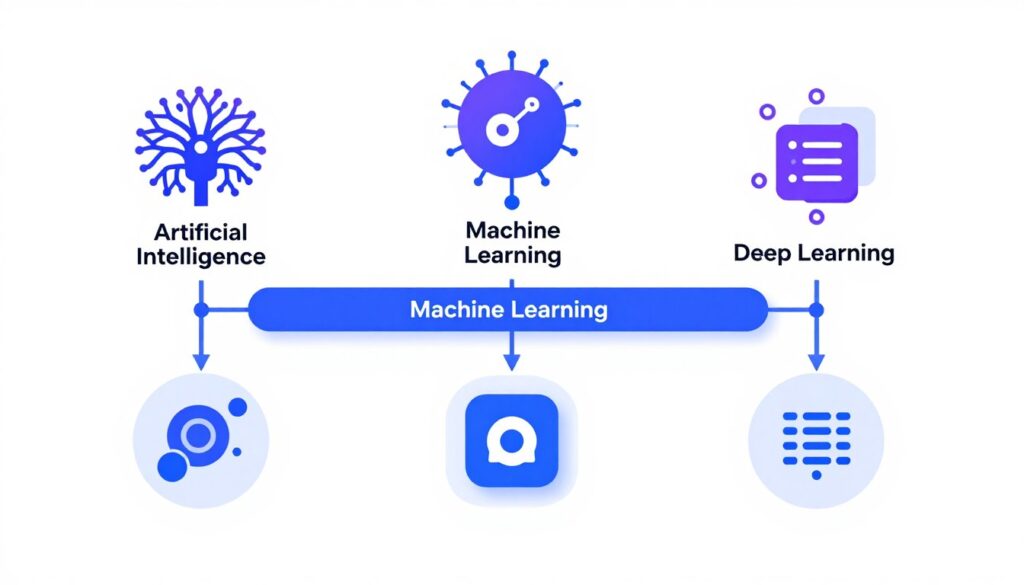
AI research encompasses several distinct specialisations, each addressing different aspects of intelligent systems. Natural language processing enables machines to understand and generate human language. Computer vision allows systems to interpret visual information from the world. Robotics research focuses on physical intelligence and autonomous systems.
Reinforcement learning researchers develop algorithms that learn through trial and error. Generative AI specialists work on systems that create new content, from text to images. Each area requires specific expertise while sharing fundamental machine learning principles.
- Natural language processing and understanding
- Computer vision and image recognition
- Reinforcement learning and decision-making systems
- Generative models and creative AI
- Robotics and autonomous systems
- Neural architecture search and model optimisation
Industry vs Academic Research
Research scientists work in both academic institutions and industry settings, each offering distinct advantages. Academic researchers enjoy greater freedom to pursue fundamental questions and publish openly. They mentor students and contribute to the broader scientific community through teaching and collaboration.
Industry researchers typically have access to larger datasets, more computational resources, and direct pathways to real-world impact. Companies like Google, Microsoft, and emerging Nigerian tech firms invest heavily in AI research. The work often focuses on problems with clear commercial applications, whilst still advancing the field.
Many successful researchers move between academia and industry throughout their careers. This cross-pollination strengthens both sectors and provides researchers with diverse experiences and perspectives.
Related: 10 Essential Transferable AI Soft Skills Every Nigerian Graduate Must Have
Key Responsibilities of AI Researchers
AI researchers shoulder diverse responsibilities that blend creative problem-solving with rigorous scientific methodology. Their daily work involves formulating research questions, designing experiments, implementing solutions, and communicating findings to both technical and non-technical audiences.
The role demands constant learning and adaptation as new techniques emerge and understanding deepens. Researchers must stay current with the latest developments whilst contributing original insights to the field.
Algorithm Development and Innovation
Creating novel machine learning algorithms stands at the heart of AI research. This involves identifying limitations in existing approaches and developing new methodologies to overcome them.
- Design new neural network architectures
- Develop improved training techniques
- Create more efficient optimisation methods
- Innovate solutions for specific problem domains
Experimental Design and Testing
Researchers must rigorously validate their ideas through well-designed experiments. This requires careful planning, implementation, and analysis of results.
- Formulate testable hypotheses
- Design controlled experiments
- Implement experimental systems
- Analyse results statistically
Data Analysis and Model Training
Working with large datasets to train and evaluate models constitutes a substantial portion of research. This includes data preparation, model development, and performance analysis.
- Collect and prepare research datasets
- Train complex neural network models
- Evaluate model performance rigorously
- Interpret results and draw conclusions
Documentation and Publication
Communicating research findings through papers, presentations, and documentation is essential. This ensures the broader community can build upon your work.
- Write research papers for peer review
- Present findings at conferences
- Maintain detailed documentation
- Contribute to open-source projects
Collaboration and Team Projects
Modern AI research rarely happens in isolation. Research scientists collaborate extensively with colleagues across disciplines, combining expertise to tackle complex challenges. A natural language processing project might involve linguists, data scientists, and domain experts working together.
Effective collaboration requires clear communication, shared understanding of goals, and mutual respect for different perspectives. Researchers must articulate technical concepts to non-specialists while understanding domain-specific requirements from collaborators outside computer science.
Team projects in AI research often span months or years. Managing long-term collaborations, coordinating efforts, and maintaining momentum through setbacks are crucial skills for successful research scientists.
Staying Current with Research Literature
The field of artificial intelligence evolves rapidly, with thousands of research papers published monthly. Staying informed about relevant developments is both challenging and essential for effective research.
Successful researchers develop systematic approaches to monitoring the literature. This includes the following key conferences, preprint servers, and research communities. They must discern which developments matter for their work whilst avoiding information overload.
- Review recent publications in your specialisation
- Attend major AI conferences and workshops
- Participate in online research communities
- Replicate important results to deepen understanding
- Engage with pre-print servers like arXiv
Essential Technical Skills for AI Researchers
Success as a research scientist demands mastery of numerous technical skills. These capabilities range from mathematical foundations to practical programming expertise. Whilst no one possesses perfect knowledge in all areas, strong researchers continuously develop their skill set.
The technical requirements can seem daunting initially, but systematic learning makes them achievable. Nigerian students and professionals can access world-class educational resources online, enabling them to build these skills regardless of location.
Programming and Software Development
Strong programming skills form the foundation of AI research. Python dominates the field due to its extensive machine learning libraries and readability. Researchers must write clean, efficient code that others can understand and build upon.
Beyond basic programming, researchers need software engineering practices. Version control with Git, collaborative development workflows, and code testing ensure research code remains reproducible and reliable. These practices become increasingly important as projects grow in complexity.
Mathematics and Statistical Foundations
Deep understanding of mathematics underpins all AI research. Linear algebra provides the language for describing neural networks and transformations. Calculus enables optimisation of learning algorithms. Probability theory forms the foundation for understanding uncertainty and making predictions.
Statistics empowers researchers to design valid experiments and interpret results correctly. Understanding statistical significance, hypothesis testing, and experimental design prevents drawing incorrect conclusions from data. These skills distinguish rigorous research from superficial experimentation.
- Linear algebra for neural network operations
- Calculus for optimisation and gradient descent
- Probability theory and statistical inference
- Information theory and entropy concepts
- Optimisation theory and convex analysis
- Graph theory for network structures
Machine Learning and Deep Learning Expertise
Comprehensive knowledge of machine learning algorithms and deep learning architectures is non-negotiable. Researchers must understand not just how to use these tools, but why they work, when they fail, and how to improve them.
This includes familiarity with the supervised, unsupervised, and reinforcement learning paradigms. Understanding various neural network architectures, from convolutional networks for vision to transformers for language, enables researchers to select appropriate approaches and identify opportunities for innovation.
| Skill Category | Specific Technologies | Proficiency Level | Time to Learn |
| Deep Learning Frameworks | TensorFlow, PyTorch, JAX | Advanced | 6-12 months |
| Classical Machine Learning | scikit-learn, XGBoost | Advanced | 3-6 months |
| Data Processing | Pandas, NumPy, SQL | Advanced | 3-6 months |
| Visualisation | Matplotlib, Seaborn, TensorBoard | Intermediate | 2-4 months |
| Distributed Computing | Ray, Horovod, Spark | Intermediate | 4-8 months |
| Cloud Platforms | AWS, Google Cloud, Azure | Intermediate | 3-6 months |
Research Methodologies and Experimental Design
Scientific rigour distinguishes research from engineering. AI researchers must design experiments that isolate variables, control for confounds, and produce reproducible results. This requires understanding experimental design principles and applying them consistently.
Good research methodology includes proper train-test splits, cross-validation, significance testing, and ablation studies. Researchers must document their methods thoroughly so others can replicate and build upon their work. These practices ensure research contributes reliable knowledge to the field.
Important Soft Skills and Personal Qualities
Technical excellence alone doesn’t make a successful research scientist. Soft skills and personal qualities often determine who thrives in AI research versus who struggles despite strong technical abilities. These human skills enable collaboration, communication, and sustained progress through challenges.
For Nigerian professionals entering this field, soft skills can provide competitive advantages. Strong communication, cultural awareness, and collaborative abilities complement technical expertise and open doors to international opportunities.
Communication and Presentation Skills
The ability to explain complex technical concepts clearly separates good researchers from great ones. You must communicate with fellow researchers, stakeholders who fund your work, and the broader public interested in AI’s implications.
Writing clear research papers requires structuring arguments logically and presenting results compellingly. Conference presentations demand distilling months of work into engaging talks. Both skills improve with practice and feedback.
- Write clear, well-structured research papers
- Present complex ideas to diverse audiences
- Create compelling visualisations of results
- Explain technical concepts to non-specialists
- Engage constructively in peer review
Problem-Solving and Critical Thinking
Research constantly presents novel problems without obvious solutions. Strong researchers approach challenges systematically, breaking complex problems into manageable components. They consider multiple approaches, anticipate potential issues, and adapt when initial strategies fail.
Critical thinking enables you to objectively evaluate your own work and others’ research. This includes questioning assumptions, identifying weaknesses in arguments, and recognising when results seem too good to be true. Healthy scepticism balanced with open-mindedness drives scientific progress.
Persistence and Resilience
AI research involves frequent setbacks. Experiments fail. Models don’t converge. Hypotheses prove incorrect. Successful researchers persist through these challenges without losing motivation or direction.
Building resilience requires maintaining perspective during difficulties and celebrating small victories. It means learning from failures rather than being discouraged by them. Research careers span decades, and sustained success requires emotional stamina as much as intellectual capability.
Advantages of Strong Soft Skills
- Enhanced collaboration with diverse teams
- Better research paper acceptance rates
- Improved funding and grant success
- Stronger industry partnerships
- Greater career advancement opportunities
- More effective mentoring relationships
Challenges Without Soft Skills
- Difficulty explaining research impact
- Limited collaboration opportunities
- Reduced visibility in the research community
- Struggles securing resources and support
- Challenges transitioning between roles
- Missed opportunities for influence
Collaboration and Teamwork
Modern AI research demands teamwork. Projects combine expertise from multiple domains. Successful researchers work effectively in teams, respecting diverse perspectives and contributing constructively to group efforts.
Good collaborators share credit generously, communicate proactively, and help teammates succeed. They navigate disagreements professionally and maintain positive relationships even when projects face challenges. These interpersonal skills become increasingly important as careers progress.
Educational Requirements and Qualifications
The educational pathway to becoming an AI researcher typically involves extensive formal education, though the route varies depending on specialisation and career goals. Understanding these requirements helps you plan an effective learning journey.
Nigerian students have multiple pathways into AI research. Local universities increasingly offer relevant programmes, whilst online education platforms provide access to world-class courses. Many successful researchers combine formal education with self-directed learning.
Bachelor’s Degree Foundation
Most AI researchers begin with a bachelor’s degree in computer science, mathematics, engineering, or related fields. This undergraduate education provides foundational knowledge in programming, algorithms, and mathematical methods essential for advanced study.
Strong undergraduate preparation includes coursework in data structures, algorithms, linear algebra, probability, and statistics. Many students supplement formal courses with personal projects, internships, and online learning to deepen their understanding.
Nigerian universities such as the University of Lagos, Covenant University, and Obafemi Awolowo University offer quality computer science programmes. International online programmes provide additional options for motivated learners.
Related: 8 AI Career Paths for Nigerians
Advanced Degrees and Specialisation
Most research scientist positions require a PhD in computer science, machine learning, or related fields. Doctoral programmes provide deep specialisation, research training, and opportunities to contribute original knowledge to the field.
A master’s degree serves as an intermediate step, offering advanced coursework and research experience. Some professionals enter industry research roles with master’s degrees, particularly in applied research settings.
| Degree Level | Typical Duration | Career Opportunities | Research Focus |
| Bachelor Degree | 4 years | Machine learning engineer, junior data scientist | Foundational knowledge, limited research |
| Master’s Degree | 1-2 years | Applied research, senior engineer positions | Specialised coursework, thesis project |
| PhD | 4-6 years | Research scientist, academic positions | Original research, multiple publications |
| Postdoctoral Research | 2-4 years | Senior research roles, academic faculty | Advanced research, leadership development |
Alternative Learning Pathways
Whilst formal education dominates, alternative pathways exist for exceptional individuals. Self-taught researchers who publish strong papers and contribute meaningfully to open-source projects occasionally secure research positions based on demonstrated ability rather than credentials.
Online courses from platforms like Coursera, edX, and Fast.ai provide high-quality education accessible to Nigerian learners. Combining these resources with personal projects, participation in competitions, and community engagement can build an impressive portfolio.
- Complete specialised online courses and certifications
- Participate in Kaggle competitions and challenges
- Contribute to open-source AI projects
- Publish pre-print papers on arXiv
- Attend workshops and summer schools
- Build a portfolio of impressive projects
Continuous Learning and Professional Development
Education doesn’t end with formal degrees. The field evolves rapidly, requiring continuous learning throughout your career. Successful researchers dedicate time regularly to studying new techniques, exploring adjacent fields, and deepening their expertise.
Professional development includes attending conferences, taking specialised courses, and collaborating with experts in different domains. This ongoing learning keeps skills current and exposes you to new ideas and approaches.
Salary Expectations and Compensation
AI researcher salaries reflect the high demand for these specialised skills combined with the extensive education required. Compensation varies significantly based on location, experience level, employer type, and specialisation area.
For Nigerian professionals, understanding both local and international salary ranges helps set realistic expectations. Many Nigerian AI researchers work remotely for international companies, accessing global salary scales whilst living locally.
International Salary Benchmarks
In the United States, entry-level research scientists with fresh PhDs typically earn between $120,000 and $180,000 annually. Mid-career researchers with several years of experience and strong publication records command $180,000 to $250,000. Senior researchers at leading companies can earn more than $300,000 in total compensation.
United Kingdom salaries range from £50,000 to £80,000 for early-career researchers, rising to £80,000 to £130,000 for experienced professionals. European markets offer similar ranges adjusted for the local cost of living.
These figures typically include base salary plus bonuses, stock options, and benefits. Total compensation packages at top technology companies often significantly exceed base salaries through equity and performance bonuses.
Nigerian Context and Local Opportunities
The Nigerian AI research market is developing, with emerging opportunities in academia, technology companies, and financial services. Local salaries typically range from ₦4,000,000 to ₦12,000,000 annually for qualified researchers, depending on experience and employer.
International remote work opportunities enable Nigerian researchers to access global salary scales. Many work for European or American companies whilst residing in Nigeria, earning competitive international compensation and benefiting from lower local living costs.
| Experience Level | USA Annual Salary | UK Annual Salary | Nigeria Annual Salary | Remote International |
| Entry Level (0-2 years) | $120,000 – $180,000 | £50,000 – £80,000 | ₦4,000,000 – ₦8,000,000 | $80,000 – $120,000 |
| Mid-Career (3-6 years) | $180,000 – $250,000 | £80,000 – £130,000 | ₦8,000,000 – ₦15,000,000 | $120,000 – $180,000 |
| Senior (7-12 years) | $250,000 – $400,000 | £130,000 – £200,000 | ₦15,000,000 – ₦25,000,000 | $180,000 – $280,000 |
| Principal/Lead (12+ years) | $400,000 – $600,000+ | £200,000 – £300,000+ | ₦25,000,000 – ₦40,000,000+ | $280,000 – $400,000+ |
Factors Influencing Compensation
Several factors significantly impact AI researcher salaries beyond simple experience levels. Publication record and research impact correlate strongly with compensation. Researchers who publish at top conferences and accumulate citations command premium salaries.
Specialisation matters considerably. Natural language processing and computer vision researchers currently earn at the high end due to intense commercial demand. Specialisations in emerging areas like quantum machine learning or neuromorphic computing also command premiums.
- Number and quality of published research papers
- Citation count and research impact
- Specialisation area and market demand
- Company type and funding level
- Geographic location and cost of living
- Leadership and team management responsibilities
Academic versus Industry Compensation
Industry research positions typically offer substantially higher compensation than academic roles. University positions provide other benefits, including tenure security, academic freedom, and student mentoring opportunities. Many researchers value these factors alongside financial considerations.
Some researchers split time between academia and industry through joint appointments or consulting arrangements. This hybrid approach can optimise both financial compensation and research freedom.
Career Progression and Growth Path
AI research careers offer multiple progression pathways, each with distinct challenges and rewards. Understanding these trajectories helps you navigate career decisions strategically and set realistic expectations for advancement timelines.
Progression isn’t purely linear. Researchers often move between different tracks from academic to industry, from technical to management, or from individual contributor to leadership roles. Flexibility and adaptability serve careers well in this dynamic field.
Academic Career Trajectory
Academic careers typically begin with postdoctoral research positions after completing a PhD. Postdocs provide opportunities to publish extensively, establish independent research programmes, and develop teaching experience. These positions typically last two to four years.
Assistant professor positions represent the next step, offering tenure-track roles with teaching, research, and service responsibilities. Success requires building a funded research programme, publishing consistently, and mentoring students. Tenure decisions typically occur after six to seven years.
Associate and full professor ranks follow for successful academics. These senior positions provide greater autonomy, influence over departmental direction, and opportunities to shape the field through major research initiatives and leadership roles.
Industry Research Career Path
Industry research careers often begin with roles as research scientists or research engineers. Early-career researchers work within established teams, contributing to ongoing projects whilst developing independent research capabilities.
Senior research scientist positions involve greater autonomy, project leadership, and mentoring junior researchers. These roles require demonstrated research impact through publications, patents, or deployed systems.
Academic Path Advantages
- Complete research freedom and autonomy
- Opportunity to mentor future researchers
- Job security through the tenure system
- Intellectual prestige and recognition
- Flexible work schedules and summers
- Deep focus on fundamental research
Industry Path Benefits
- Significantly higher compensation packages
- Access to massive datasets and computing
- Direct real-world impact and deployment
- Collaborative resources and support
- Faster iteration and feedback cycles
- Exposure to production systems
Hybrid Opportunities
- Joint academic-industry appointments
- Consulting alongside the primary role
- Sabbaticals in an alternate sector
- Collaborative research partnerships
- Adjunct teaching positions
- Advisory board memberships
Management and Leadership Tracks
Experienced researchers often transition into management roles, leading research teams or entire research organisations. These positions require balancing technical vision with people management, resource allocation, and strategic planning.
Research directors and vice presidents shape organisational research strategy, build teams, and ensure research aligns with broader company objectives. Success requires both technical credibility and strong leadership capabilities.
Some researchers prefer to remain individual contributors throughout their careers, deepening their technical expertise rather than managing people. Distinguished researcher or fellow positions recognise exceptional technical contributions without requiring management responsibilities.
Entrepreneurship and Startup Opportunities
Many AI researchers eventually start companies to commercialise their research. Entrepreneurship offers opportunities to capture value from innovations directly while solving real-world problems.
Successful research-based startups require the complementary combination of technical expertise, business acumen, fundraising ability, and team building. Many researchers partner with experienced entrepreneurs to balance these requirements.
- Identify commercial applications for research innovations
- Build founding teams with complementary skills
- Secure initial funding from investors or grants
- Navigate the transition from research to product development
- Scale operations whilst maintaining research quality
- Balance research advancement with business objectives
Work Environment and Culture
Understanding the work environment for AI researchers helps set realistic expectations and prepare for the day-to-day reality of the role. Research environments vary significantly between academic institutions, large technology companies, and research-focused startups.
The culture emphasises intellectual curiosity, rigorous methodology, and collaborative problem-solving. Researchers work in environments that reward innovation, tolerate calculated risks, and value continuous learning.
Typical Work Setting and Schedule
Most AI researchers work in office or laboratory settings equipped with powerful computing resources. Modern research environments emphasise collaboration through open floor plans, meeting spaces, and shared equipment areas.
Work schedules offer considerable flexibility compared to traditional office jobs. Researchers often set their own hours, working intensively during critical project phases and more moderately during planning or writing periods. Remote work has become increasingly common, particularly for industry researchers.
The work involves extended periods of concentration interspersed with collaborative meetings, presentations, and discussions. Balancing focused individual work with productive collaboration is an ongoing challenge.
Collaboration and Team Dynamics
Research teams typically include researchers at various career stages, from PhD students to senior scientists. Effective teams foster open communication, mutual respect, and knowledge sharing across experience levels.
Cross-functional collaboration with engineers, product managers, and domain experts is increasingly common. AI researchers must communicate effectively with colleagues who have different priorities, constraints, and technical backgrounds.
Research Culture and Expectations
Research culture values intellectual honesty, reproducibility, and open sharing of results. Researchers are expected to publish their findings, contribute to the broader community, and build upon others’ work whilst giving proper credit.
Peer review, both formal and informal, shapes research quality. Researchers must accept criticism constructively and provide thoughtful feedback to colleagues. This culture of constructive critique strengthens individual work and advances the field.
- Regular presentation of work to the team and broader groups
- Participation in paper-reading groups and seminars
- Mentoring junior researchers and students
- Engagement with the broader research community
- Contribution to open-source projects and datasets
- Attendance at conferences and workshops
Work-Life Balance Considerations
Research careers offer flexibility but can blur work-life boundaries. The intellectual engagement makes work feel less like traditional employment, which can lead some researchers to overwork. Maintaining healthy boundaries requires conscious effort.
Academic research deadlines, particularly for conference submissions, create intense periods of work. Industry researchers face product launch pressures and quarterly goals. Managing these demands whilst preserving personal time and relationships is an important skill.
Remote work opportunities, particularly for Nigerian researchers working with international teams, require strong self-discipline and communication. Setting clear working hours, providing a dedicated workspace, and holding regular check-ins with teammates help maintain productivity and balance.
Industry Sectors and Specialisations
AI researchers work across diverse industry sectors, each offering unique challenges, applications, and research opportunities. Understanding these sectors helps you identify areas aligned with your interests and values.
Specialisation enables deeper expertise whilst potentially limiting flexibility. Many successful researchers maintain broad knowledge whilst developing depth in specific areas. This T-shaped skill profile provides both versatility and unique expertise.
Technology and Internet Companies
Major technology companies employ large AI research teams working on products used by billions. These organisations offer exceptional resources, diverse problems, and opportunities to create a broad impact.
Research at technology companies often balances fundamental research with practical application. Teams work on challenges ranging from improving search algorithms to developing conversational AI systems. The work combines theoretical innovation with real-world deployment considerations.
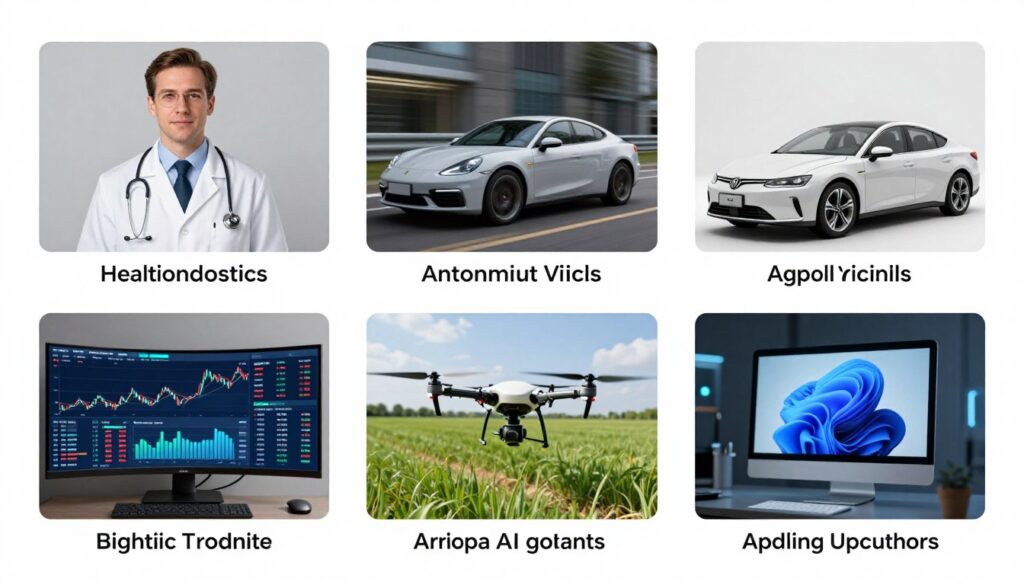
Healthcare and Biotechnology
AI research in healthcare addresses critical problems, including disease diagnosis, drug discovery, and personalised treatment planning. These applications combine machine learning with medical knowledge to improve patient outcomes.
Healthcare AI research requires understanding both technical methods and medical domain knowledge. Collaborating with clinicians, understanding regulatory requirements, and ensuring patient safety add complexity beyond pure technical challenges.
- Medical image analysis for disease detection
- Drug discovery and molecular design
- Personalised treatment recommendation systems
- Genomic analysis and precision medicine
- Clinical decision support systems
- Healthcare operations optimisation
Financial Services and Fintech
Financial institutions employ AI researchers to develop trading algorithms, risk assessment models, and fraud detection systems. These applications process enormous volumes of data and require both accuracy and interpretability.
Research in finance combines machine learning with economic theory, regulatory compliance, and risk management. The work often addresses challenges unique to financial markets including non-stationarity, adversarial actors, and strict accuracy requirements.
Autonomous Systems and Robotics
Robotics research combines AI with physical systems, addressing challenges in perception, planning, and control. Applications range from autonomous vehicles to manufacturing automation to domestic robots.
This specialisation requires understanding both software and hardware systems. Researchers work on problems including navigation in uncertain environments, manipulation of diverse objects, and safe human-robot interaction.
| Sector | Key Applications | Typical Employers | Unique Challenges |
| Technology Platforms | Search, recommendations, content moderation | Google, Meta, Microsoft, Amazon | Scale, latency, and user privacy |
| Healthcare | Diagnosis, drug discovery, genomics | Hospitals, pharma companies, medtech startups | Regulation, safety, interpretability |
| Finance | Trading, risk assessment, fraud detection | Banks, hedge funds, fintech companies | Non-stationarity, adversarial robustness |
| Automotive | Autonomous driving, safety systems | Tesla, Waymo, traditional automakers | Safety-critical systems, edge cases |
| Agriculture | Crop monitoring, yield prediction | Agtech startups, equipment manufacturers | Limited data, environmental variability |
| Education | Personalised learning, assessment | EdTech companies, universities | Diverse learners, pedagogical validity |
Emerging Application Areas
New application areas for AI research continually emerge. Climate science employs AI for weather prediction and climate modelling. Creative industries use generative models for content creation. Scientific research applies machine learning to accelerate discovery across disciplines.
Nigerian researchers have opportunities in sectors particularly relevant to African contexts. Agricultural AI addresses crop yield optimisation and disease detection. Healthcare AI tackles challenges specific to resource-limited settings. Financial inclusion applications serve unbanked populations.
Challenges and Rewards of AI Research
Every career involves trade-offs between challenges and rewards. AI research offers unique satisfactions alongside specific difficulties. Understanding both aspects helps you make informed career decisions and prepare for the realities of research work.
The field attracts people motivated by intellectual challenge, curiosity about intelligence, and the desire to create impact. These intrinsic motivations often matter more than external rewards in sustaining long research careers.

Intellectual Challenges and Problem-Solving
AI research confronts you with genuinely difficult problems lacking known solutions. This intellectual challenge attracts many to the field. The work requires creativity, persistence, and a willingness to explore uncharted territory.
Problems often resist solution for months or years. Progress comes through incremental improvements, unexpected insights, and occasional breakthroughs. This uncertainty can frustrate those preferring clear paths and predictable outcomes.
The intellectual rewards of solving previously unsolved problems, however, create profound satisfaction. Contributing new knowledge to human understanding represents a unique form of achievement.
Publication Pressure and Competition
Research careers depend significantly on publication records. This creates pressure to produce novel results worthy of publication at competitive conferences. The peer review process can be demanding, with papers often rejected multiple times before acceptance.
Competition in AI research has intensified as the field has grown. More researchers compete for publications at top conferences. Standing out requires either exceptional technical contributions or identifying underexplored problem areas.
- Navigate the competitive publication process
- Handle rejection and critical peer reviews
- Balance quantity versus quality of publications
- Establish a unique research identity and contributions
- Manage pressure for continuous productivity
- Stay motivated through extended project timelines
Impact and Contribution to Society
AI research creates opportunities for meaningful societal impact. Your work might improve healthcare outcomes, enhance educational access, or solve environmental challenges. This sense of purpose motivates many researchers through difficult periods.
The impact isn’t always immediate or obvious. Fundamental research often takes years to influence practical applications. Patience and faith in long-term value help sustain motivation when immediate impact isn’t visible.
Continuous Learning Requirements
The rapid pace of progress in artificial intelligence requires constant learning. New techniques emerge frequently. Methods that seemed cutting-edge become obsolete within years. This constant evolution keeps work interesting but demands sustained effort to stay current.
For those who enjoy learning, this represents a reward rather than a burden. The field never becomes stale or routine. There’s always something new to understand, explore, and master.
Perspective from Nigerian Researchers: Nigerian AI researchers often balance multiple responsibilities, including contributing to global research, whilst addressing local challenges. This dual focus can be demanding, but it provides unique opportunities to bridge international research advances with African problems. Many find this combination particularly rewarding, creating both global impact and local relevance.
Work-Life Integration
Research work often integrates deeply with personal life. The intellectual engagement doesn’t stop at defined working hours. Many researchers think about problems in the evenings, on weekends, and during holidays. This integration can enrich life or create an imbalance depending on how you manage it.
Successful researchers develop strategies for maintaining boundaries whilst allowing productive integration. This might include dedicated work hours, regular breaks from research, and hobbies unrelated to artificial intelligence.
Future Outlook and Trends in AI Research
The field of artificial intelligence continues evolving rapidly, creating both opportunities and uncertainties for research careers. Understanding emerging trends helps you position yourself strategically and prepare for future developments.
Long-term career success requires adaptability as research priorities shift. Areas receiving intense focus today might mature or become less central. New challenges emerge as AI systems become more capable and widely deployed.
Growing Demand for AI Expertise
Demand for AI researchers remains exceptionally high across industries and geographies. Organisations recognise artificial intelligence as fundamental to future competitiveness. This demand translates to abundant opportunities, competitive compensation, and career security.
The demand extends beyond traditional technology companies. Healthcare, finance, manufacturing, agriculture, and virtually every sector seek AI expertise. This diversification creates opportunities to apply research skills in varied contexts.
For Nigerian professionals, international demand enables remote work opportunities with global organisations. Local demand is also growing as African companies and institutions invest in AI capabilities.
Emerging Research Areas
Several research areas show particular promise and growth. Multimodal learning combines information from text, images, audio, and other sources. This reflects how humans naturally process information and enables richer AI applications.
Efficient AI focuses on reducing the computational and energy requirements of machine learning. This includes model compression, efficient architectures, and training methods. As AI deployment scales, efficiency becomes increasingly critical.
- Multimodal learning combining vision, language, and audio
- Efficient and sustainable AI methods
- AI safety and alignment research
- Embodied AI and robotics
- Quantum machine learning approaches
- Neuromorphic computing and brain-inspired systems
Ethical Considerations and Responsible AI
Growing awareness of AI’s societal impacts increases focus on responsible development. Research addressing fairness, transparency, privacy, and safety attracts increasing attention and funding. These considerations are becoming central rather than peripheral to AI research.
Researchers increasingly consider not just what AI systems can do, but what they should do. This includes developing technical methods for alignment, interpretability, and robustness, as well as addressing broader societal implications.
Interdisciplinary Collaboration
Future AI research increasingly involves collaboration across disciplines. Solving complex real-world problems requires combining AI expertise with domain knowledge from medicine, climate science, social sciences, and other fields.
This trend creates opportunities for researchers who can bridge technical and domain expertise. Understanding both machine learning methods and application contexts becomes increasingly valuable.
Opportunities for Nigerian Researchers: Africa faces unique challenges where AI research can create a substantial impact. Healthcare systems, agricultural productivity, financial inclusion, and education all present opportunities for meaningful research contributions. Nigerian researchers are well-positioned to address these challenges, combining international research methods with a deep understanding of local contexts.
Evolution of Research Methodologies
Research methodologies themselves evolve with the field. Large-scale pre-training followed by fine-tuning has transformed natural language processing. Similar paradigm shifts might occur in other areas. Staying adaptable to new research approaches ensures continued relevance.
The role of data, compute, and algorithmic innovation in driving progress continues evolving. Understanding which factors matter most for different problems helps direct research efforts effectively.
How to Get Started in AI Research
Beginning an AI research career requires strategic planning and systematic skill development. The pathway involves building foundational knowledge, gaining practical experience, and establishing yourself within the research community.
For Nigerian aspiring researchers, the journey is entirely achievable with dedication and strategic resource utilisation. Modern online education, open-source tools, and global research communities remove many traditional barriers to entry.

Building Foundational Knowledge
Start with strong foundations in mathematics, programming, and basic machine learning. Online courses provide excellent starting points. Andrew Ng’s Machine Learning course on Coursera offers a comprehensive introduction. Fast.ai provides practical deep learning education, emphasising hands-on implementation.
Complement online courses with textbooks. “Deep Learning” by Goodfellow, Bengio, and Courville provides comprehensive coverage. “Pattern Recognition and Machine Learning” by Bishop offers a rigorous mathematical treatment. Reading these alongside courses deepens understanding.
Practice programming extensively. Implement algorithms from scratch rather than relying solely on libraries. This builds intuition about how methods work and develops debugging skills essential for research.
Gaining Practical Experience
Practical experience complements theoretical knowledge. Personal projects demonstrate skills to potential employers or graduate programmes. Choose projects aligned with your interests that solve real problems.
Kaggle competitions provide structured challenges with real datasets. Participating exposes you to practical machine learning workflows and connects you with a global community. Even moderate success in competitions strengthens your profile.
- Complete online courses with hands-on projects
- Participate in Kaggle or similar ML competitions
- Contribute to open-source AI projects
- Build a portfolio of personal projects
- Seek internships or research assistant positions
- Replicate results from recent research papers
Entering Graduate Education
Graduate education provides structured research training and credentials. Research potential programmes carefully, considering faculty expertise, research culture, funding, and placement outcomes.
Strong applications demonstrate research potential through prior projects, recommendations from research mentors, and clear research interests. The statement of purpose should articulate specific research questions you want to explore.
Nigerian students should consider both local and international programmes. International education offers access to leading research groups but requires significant financial resources. Local programmes can provide quality education at a lower cost with growing research capabilities.
Building Your Research Network
Research communities provide support, collaboration, and opportunities. Engage with communities through conferences, online forums, and social media. Twitter, in particular, hosts active AI research discussions.
Attend conferences even before publishing. Many offer student volunteer programmes providing free attendance. Exposure to cutting-edge research and networking opportunities proves invaluable for career development.
Find mentors who can provide guidance, feedback, and support. This might include professors, senior researchers at companies, or more experienced peers. Don’t hesitate to reach out with thoughtful questions or requests for advice.
How long does it take to become an AI researcher?
The timeline varies based on the starting point and the path chosen. With a bachelor’s degree in a relevant field, expect 4-6 years for a PhD. Adding postdoctoral research brings the total to 6-10 years from undergraduate completion. Alternative paths through industry may be faster, but typically still require 3-5 years of focused skill development and experience building.
Can I become an AI researcher without a PhD?
Whilst possible, it’s challenging. Most research scientist positions require PhDs. However, exceptional individuals with strong publication records, open-source contributions, and demonstrated research ability occasionally secure positions based on merit rather than credentials. Applied research roles and research engineering positions may be more accessible with master’s degrees.
What programming languages should I learn?
Python is essential, as it is the dominant language for machine learning research. Learn it thoroughly, including libraries like NumPy and Pandas, as well as deep learning frameworks such as PyTorch and TensorFlow. Additional languages like C++ for performance-critical code or Julia for numerical computing can be beneficial, but are secondary to Python proficiency.
Are there opportunities for AI researchers in Nigeria?
Yes, opportunities are growing. Nigerian universities, research institutions, and technology companies increasingly invest in AI capabilities. International remote work provides additional opportunities to work with global organisations whilst residing in Nigeria. The combination of local and international opportunities creates viable career paths for Nigerian researchers.
How important are publications for an AI research career?
Publications are extremely important, particularly for academic careers and senior industry research positions. They demonstrate research ability, domain expertise, and contribution to the field. Quality matters more than quantity—publications at top-tier conferences carry significantly more weight than numerous publications in lesser venues.
What’s the difference between an AI researcher and a machine learning engineer?
AI researchers focus on creating new methods and advancing the field through original research. Machine learning engineers primarily apply existing methods to solve practical problems and deploy systems. Researchers emphasise novelty and publication; engineers prioritise robust, scalable implementations. Both roles are valuable with different focuses and requirements.
Putting things together
The AI researcher career path offers extraordinary opportunities for those passionate about advancing artificial intelligence. The role combines intellectual challenge, meaningful impact, and strong career prospects. Whilst the educational requirements are substantial and competition is intense, dedicated individuals can successfully enter and thrive in this field.
For Nigerian professionals, AI research represents a field where talent and dedication matter more than geographic location. The combination of strong foundational education, practical experience, continuous learning, and active community engagement creates pathways to success regardless of starting circumstances.
The field’s rapid evolution ensures work remains stimulating and relevant. New challenges constantly emerge, requiring fresh perspectives and innovative approaches. This dynamism attracts curious, motivated individuals who enjoy pushing boundaries and exploring unknown territory.
Success requires more than technical skills alone. Communication abilities, persistence, collaboration, and ethical awareness complement technical expertise. Developing this complete skill set positions you for long-term career success and meaningful contributions.
Whether you pursue academic research, industry positions, or entrepreneurial ventures, the foundational capabilities remain valuable. The critical thinking, problem-solving, and technical skills you develop as a researcher apply broadly across technology careers.
The journey begins with a single step. Start building foundational knowledge today. Engage with the research community. Work on projects that excite you. Seek mentors and learning opportunities. With consistent effort and strategic planning, an AI research career is within reach for motivated individuals willing to invest in their development.
The future of artificial intelligence will be shaped by researchers starting their journeys today. Your contributions could advance the field in ways not yet imagined, solving problems that improve lives globally. The opportunity to participate in this transformative field represents a rare privilege and responsibility.

Oke O. Michael (HND, BA, MBA, MSc) is a tech-savvy professional with experience in sales, healthcare, digital marketing, and business development. A skilled editor and passionate web designer, he combines strong technical insight with creative problem-solving to deliver impactful digital and business solutions.