


Nigeria stands at the threshold of an artificial intelligence revolution. The country’s tech ecosystem has experienced remarkable growth, with AI emerging as one of the most promising career paths for ambitious professionals.
Starting a career in artificial intelligence might seem overwhelming. However, with proper guidance and structured learning, Nigerian beginners can successfully enter this transformative field.
This comprehensive guide provides practical steps, real-world examples, and actionable strategies specifically tailored for Nigerians seeking to build successful AI careers. Whether you’re a recent graduate, career changer, or student planning your future, you’ll find valuable insights to navigate your journey into artificial intelligence.
Understanding the AI Landscape in Nigeria
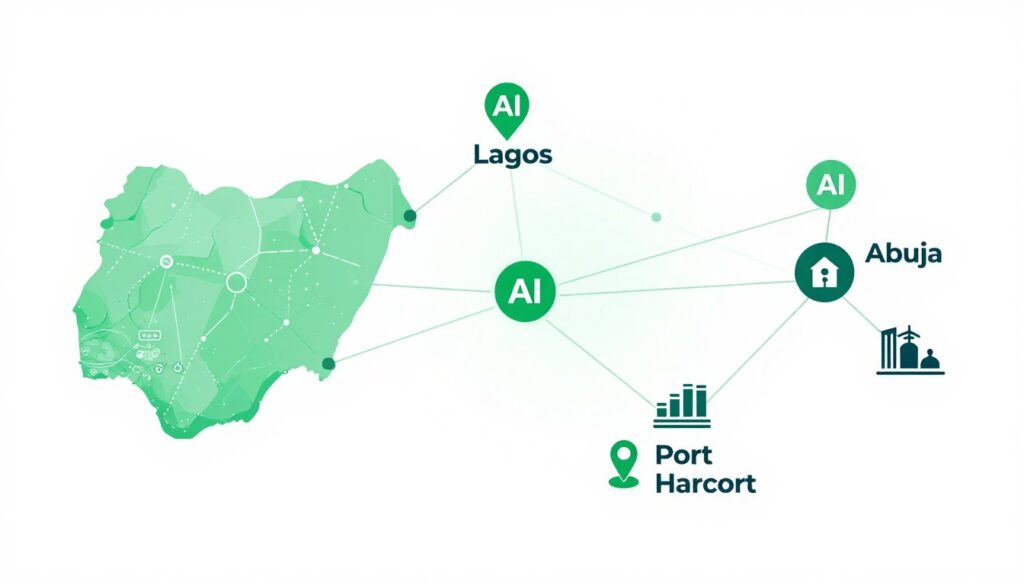
The artificial intelligence sector in Nigeria has witnessed exponential growth over recent years. Major technology companies and startups increasingly establish presence in Nigerian cities, creating substantial demand for AI talent.
Lagos serves as Nigeria’s primary tech hub. The city hosts numerous artificial intelligence startups, multinational technology firms, and innovation centres. Companies actively recruit data scientists, machine learning engineers, and AI specialists to develop solutions for African markets.
Abuja and Port Harcourt also experience growing AI adoption. Government initiatives and private sector investments drive demand for professionals with artificial intelligence expertise. Financial institutions, healthcare providers, and telecommunications companies integrate AI solutions into their operations.
Current Market Demand for AI Professionals
Nigerian organisations face significant talent shortages in artificial intelligence roles. According to industry reports, demand for AI specialists outpaces supply by considerable margins. This gap creates exceptional opportunities for trained professionals.
Remote work possibilities further expand opportunities. Nigerian AI professionals increasingly secure positions with international companies, earning competitive salaries whilst working from home. This trend democratises access to global opportunities regardless of physical location.

Microsoft’s recent initiative to train 350,000 Nigerians in AI skills demonstrates the scale of opportunity. Such programmes signal strong institutional commitment to developing artificial intelligence talent pools across the country.
Key Industries Adopting AI in Nigeria
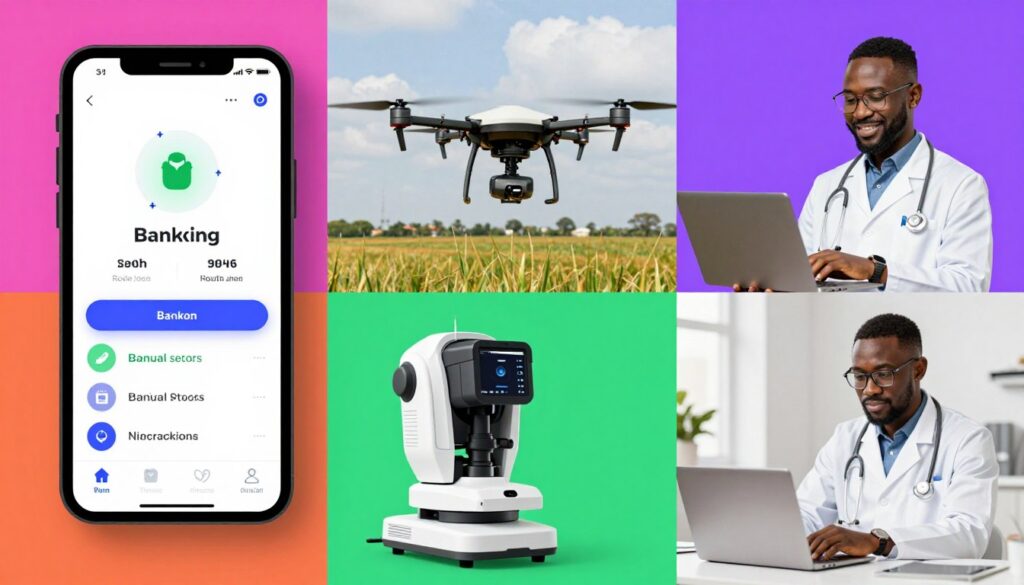
Financial services lead AI adoption in Nigeria. Banks deploy artificial intelligence for fraud detection, customer service automation, and credit scoring. Fintech startups leverage machine learning to provide innovative payment solutions and financial inclusion services.
Agriculture represents another significant opportunity. Nigerian agritech companies employ AI for crop monitoring, yield prediction, and supply chain optimisation. These solutions address critical food security challenges whilst creating employment for AI specialists.
Healthcare institutions increasingly implement AI diagnostic tools. Startups develop machine learning models to assist medical professionals with disease detection and treatment planning. This growing sector requires professionals who understand both artificial intelligence and healthcare domains.
Essential AI Career Paths for Nigerian Beginners
Artificial intelligence encompasses diverse career opportunities. Understanding different roles helps beginners identify paths aligned with their interests and aptitudes. Each position requires specific skills and offers unique challenges.
Machine Learning Engineer

Machine learning engineers design and implement systems that learn from data. These professionals build predictive models, optimize algorithms, and deploy AI solutions into production environments. The role combines software engineering expertise with statistical knowledge.
Nigerian machine learning engineers work across sectors. For instance, a Lagos-based engineer might develop fraud detection models for banking clients. Another might create recommendation systems for e-commerce platforms serving African markets.
Required skills include proficiency in Python or R programming languages. Engineers must understand algorithms, data structures, and software development best practices. Familiarity with frameworks like TensorFlow, PyTorch, and Scikit-learn proves essential.
Entry-level positions typically require bachelor’s degrees in computer science, mathematics, or related fields. However, self-taught individuals with strong portfolios successfully secure roles. Practical experience through projects demonstrates competence more effectively than credentials alone.
Data Scientist
Data scientists extract insights from complex datasets. They formulate business questions, design analytical approaches, and communicate findings to stakeholders. This role emphasises statistical analysis and business acumen alongside technical skills.
A practical example involves a Nigerian e-commerce company analysing customer behaviour. The data scientist examines purchase patterns, identifies trends, and recommends strategies to improve sales. These insights directly impact business decisions and revenue growth.

Essential competencies include statistical analysis, data visualization, and machine learning fundamentals. Proficiency with SQL databases and tools like Tableau or Power BI enables effective data manipulation and presentation. Communication skills prove equally important for translating technical findings into actionable recommendations.
Many Nigerian data scientists start careers in telecommunications or banking sectors. These industries generate massive datasets requiring skilled analysis. Experience in these domains provides strong foundations for advancing into specialized AI roles.
AI Research Scientist
Research scientists advance artificial intelligence theory and methods. They publish papers, develop novel algorithms, and push boundaries of what AI systems can accomplish. This career path suits individuals passionate about fundamental research and innovation.
Nigerian universities and research institutions employ AI researchers. For detailed information about this career path, explore this comprehensive AI researcher job description which outlines responsibilities and requirements.
This role typically requires advanced degrees—master’s or doctoral qualifications in computer science, mathematics, or related disciplines. Research experience, publications, and contributions to open-source projects strengthen candidacy for these positions.
AI Product Manager

Product managers bridge technical teams and business stakeholders. They define product vision, prioritize features, and ensure AI solutions meet user needs. This role combines technical understanding with business strategy and user experience design.
Consider a Nigerian fintech startup developing an AI-powered lending platform. The product manager defines target customers, specifies required features, and coordinates with engineers and designers. They balance technical feasibility with market demands and business objectives.
Successful AI product managers possess solid technical foundations without necessarily writing production code. They understand machine learning capabilities and limitations, enabling realistic product roadmaps. Strong communication and leadership skills prove critical for managing cross-functional teams.
Computer Vision Engineer
Computer vision engineers develop systems that interpret visual information. Applications include facial recognition, object detection, and image analysis. These specialists work at the intersection of artificial intelligence and image processing.
Nigerian security companies increasingly deploy computer vision solutions. Engineers build systems for surveillance, access control, and automated monitoring. Agricultural applications include crop disease detection through image analysis of plant leaves.

Core competencies include deep learning, image processing algorithms, and programming. Frameworks like OpenCV, YOLO, and various convolutional neural network architectures form the engineer’s toolkit. Mathematics, particularly linear algebra and calculus, provides essential theoretical foundations.
Entry into computer vision often begins with general software engineering or machine learning roles. Building a portfolio with computer vision projects demonstrates capability to potential employers. Participating in competitions on platforms like Kaggle provides practical experience and visibility.
Educational Pathways and Qualifications

Multiple educational routes lead to AI careers. Traditional degrees provide comprehensive foundations, whilst alternative learning paths offer flexibility and focused skill development. Nigerian learners benefit from diverse options suited to different circumstances.
University Degrees and Academic Programmes
Nigerian universities offer computer science, mathematics, and engineering programmes providing strong AI foundations. Institutions including the University of Lagos, Obafemi Awolowo University, and Covenant University incorporate artificial intelligence courses into curricula.
Bachelor’s degrees in computer science cover essential topics: algorithms, data structures, programming, and mathematics. These fundamentals enable deeper AI specialisation through postgraduate studies or self-directed learning after graduation.
Postgraduate programmes focusing specifically on artificial intelligence and machine learning exist at several Nigerian institutions. These programmes delve into advanced topics including deep learning, natural language processing, and reinforcement learning. Graduates emerge with specialized knowledge applicable to research or industry roles.
International students and professionals pursue online master’s degrees from global universities. Programmes from institutions like Stanford University, MIT, and University of Edinburgh remain accessible to Nigerian learners through distance education. These credentials carry international recognition whilst accommodating working professionals.
Online Courses and Certification Programmes

Online platforms democratise AI education. Coursera, edX, and Udacity offer courses from leading universities and companies. Nigerian learners access world-class instruction at affordable prices, often with financial aid options available.
Andrew Ng’s Machine Learning course on Coursera serves as an excellent starting point. This foundational course explains core concepts with practical assignments. Thousands of Nigerians have completed this programme, launching their AI careers from this base.
The Deep Learning Specialization provides comprehensive neural network training. Practical projects include building image classifiers, sequence models, and recommendation systems. These hands-on experiences prove invaluable during job applications.
Fast.ai offers practical deep learning courses emphasising immediate application. The teaching philosophy focuses on coding first, theory later. This approach suits learners who prefer learning through building rather than extensive theoretical study before implementation.
Professional certifications from Google, Microsoft, and AWS validate cloud-based AI skills. Google’s TensorFlow Developer Certificate and AWS Machine Learning Specialty demonstrate practical competence with industry-standard tools. These credentials enhance employability for remote jobs with international companies.
Bootcamps and Intensive Training Programmes
Coding bootcamps provide accelerated paths into technology careers. Several Nigerian and international bootcamps offer AI-focused programmes. These intensive courses compress months of learning into weeks through immersive instruction.

Programmes typically span 8-16 weeks with full-time commitment required. Curriculum covers programming fundamentals, machine learning algorithms, and practical project work. Many bootcamps include career services helping graduates secure employment.
Cost represents a consideration for many Nigerian learners. Some bootcamps offer income-share agreements where students pay tuition from future salaries after securing employment. This model reduces upfront financial barriers while aligning programme incentives with student success.
Self-Directed Learning and Resources
Self-taught paths remain viable for disciplined learners. Abundant free resources enable comprehensive AI education without formal programmes. Success requires structured learning plans, consistent practice, and portfolio development.
Start with Python programming fundamentals. Resources like “Automate the Boring Stuff with Python” provide accessible introductions. Progress to NumPy, Pandas, and Matplotlib libraries essential for data manipulation and visualization.
Machine learning concepts follow programming foundations. Books like “Hands-On Machine Learning with Scikit-Learn, Keras, and TensorFlow” by Aurélien Géron offer practical guidance. Working through examples and exercises builds understanding through application.
YouTube channels including Sentdex, 3Blue1Brown, and StatQuest provide free video instruction. These visual explanations clarify complex concepts through animations and examples. Supplementing reading with video content enhances comprehension through multiple learning modalities.
GitHub repositories contain countless open-source AI projects. Studying others’ code accelerates learning by exposing learners to professional coding practices. Contributing to open-source projects builds portfolios whilst developing collaborative skills valued by employers.
Essential Skills Development
Success in AI careers requires both technical competencies and soft skills. Nigerian professionals must develop comprehensive capabilities extending beyond coding proficiency. This section explores critical skills and practical methods for acquiring them.
Programming Languages and Tools
Python dominates AI development due to extensive libraries and community support. Beginners should achieve solid Python proficiency before advancing to specialized AI topics. Understand variables, functions, classes, and object-oriented programming principles.
Libraries form the toolkit for AI practitioners. NumPy provides numerical computing capabilities essential for mathematical operations. Pandas enables data manipulation and analysis. Matplotlib and Seaborn create visualizations communicating insights effectively.
Machine learning frameworks require dedicated study. Scikit-learn offers accessible introduction to traditional algorithms. TensorFlow and PyTorch enable deep learning implementations. Keras provides user-friendly interface simplifying neural network construction.
R programming serves as alternative for statistical analysis-focused roles. Data scientists in research or academic settings often prefer R for its statistical packages. While Python remains more versatile for production systems, R proficiency adds value in analytical contexts.
Version control with Git constitutes essential engineering practice. Understanding repositories, commits, branches, and pull requests enables collaboration on team projects. GitHub profiles showcase project portfolios to potential employers.
Mathematics and Statistics Foundations
Mathematical understanding separates superficial knowledge from deep comprehension. Linear algebra underpins much of machine learning matrices, vectors, and transformations form the computational basis of algorithms.
Calculus enables optimization understanding. Gradients, derivatives, and chain rule application explain how neural networks learn. While frameworks automate calculations, grasping underlying mathematics improves model design and troubleshooting abilities.
Probability and statistics prove fundamental for data science. Distributions, hypothesis testing, and Bayesian reasoning inform analytical approaches. Understanding confidence intervals and statistical significance prevents misinterpretation of results.
Khan Academy offers free mathematics instruction from basics through advanced topics. 3Blue1Brown’s YouTube series “Essence of Linear Algebra” provides intuitive visual explanations. These resources make mathematical concepts accessible without requiring expensive textbooks or courses.
Practical application reinforces theoretical learning. Implementing algorithms from scratch—even simple ones like linear regression—deepens understanding of mathematical operations. This exercise bridges abstract mathematics and concrete code implementation.
Domain Knowledge and Business Acumen
Technical skills alone prove insufficient for impactful AI work. Understanding business contexts and domain-specific knowledge enables relevant solution development. Nigerian professionals gain competitive advantages by combining AI expertise with industry knowledge.
Financial sector AI applications require understanding banking operations, regulatory requirements, and risk management principles. A machine learning engineer developing fraud detection systems benefits from comprehending transaction flows and common fraud patterns.
Healthcare AI demands medical knowledge and patient care awareness. Systems assisting diagnosis must account for clinical workflows and healthcare provider needs. Collaborating with medical professionals ensures AI tools genuinely improve patient outcomes.
Agricultural applications need familiarity with farming practices, crop cycles, and supply chain logistics. AI solutions for Nigerian farmers must account for local conditions, resource constraints, and practical field implementation challenges.
Develop domain expertise through immersion and collaboration. Read industry publications, attend sector-specific conferences, and engage with domain experts. This investment pays dividends through more relevant project work and stronger job applications in specialized sectors.
Soft Skills That Matter
Communication abilities determine how effectively AI professionals contribute beyond purely technical execution. Explaining complex concepts to non-technical stakeholders ensures AI initiatives receive proper support and resources.
Data storytelling transforms analytical findings into compelling narratives. Visualizations, clear writing, and presentation skills convey insights persuasively. Business stakeholders make decisions based on how well data scientists communicate rather than analytical sophistication alone.
Explore 10 essential transferable AI soft skills that Nigerian graduates need. These competencies including critical thinking, adaptability, and collaboration complement technical abilities and significantly enhance career prospects.
Problem-solving approaches distinguish exceptional AI professionals. Breaking complex challenges into manageable components, systematic debugging, and creative solution exploration characterize strong problem solvers. These skills develop through practice across diverse projects.
Teamwork capabilities enable productive collaboration with engineers, designers, product managers, and business leaders. AI projects require coordinated efforts across disciplines. Professionals who communicate clearly, accept feedback graciously, and contribute constructively to teams become invaluable.
Continuous learning mindsets prove essential given AI’s rapid evolution. New techniques, frameworks, and research findings emerge constantly. Professionals committed to ongoing education maintain relevant skills throughout careers spanning decades.
Practical Steps for Getting Started
Transitioning from beginner to employable AI professional requires structured approach. These actionable steps provide clear pathway from current position to first AI role. Each phase builds upon previous accomplishments.
Month 1-2: Building Programming Foundations
Begin with Python programming basics. Dedicate 2-3 hours daily to learning syntax, data types, control structures, and functions. Complete beginner courses from platforms like Codecademy or SoloLearn for interactive practice.
Install Python and Jupyter Notebooks on your computer. Practice writing small programmes solving everyday problems. Calculate expenses, organize data, or automate repetitive tasks. This hands-on work solidifies conceptual understanding.
Join online communities including Nigerian Python groups on Facebook and LinkedIn. Engage with fellow learners, ask questions, and share progress. Community connections provide motivation and practical assistance when challenges arise.
Project idea: Create a simple expense tracker that accepts inputs, categorizes spending, and generates monthly summaries. This project exercises programming fundamentals whilst producing useful personal tool.
Month 3-4: Data Analysis Skills
Progress to NumPy and Pandas libraries. Work through tutorials manipulating datasets, calculating statistics, and cleaning messy data. Data preparation constitutes major portion of real-world AI work proficiency here proves invaluable.
Learn data visualization with Matplotlib and Seaborn. Create charts communicating patterns and insights effectively. Good visualizations make complex data accessible to non-technical audiences.
Download public Nigerian datasets from sources like the National Bureau of Statistics or Nigeria Data Portal. Analyze population statistics, economic indicators, or health metrics. Working with local data adds portfolio relevance for Nigerian employers.
Project idea: Analyze Nigerian unemployment data across states and demographics. Create visualizations showing trends over time. Write brief report explaining findings. This demonstrates analytical thinking alongside technical skills.
Month 5-6: Introduction to Machine Learning
Enroll in foundational machine learning course. Andrew Ng’s Coursera offering remains excellent choice. Complete all assignments and programming exercises—passive video watching proves insufficient for skill development.
Implement basic algorithms from scratch: linear regression, logistic regression, and k-nearest neighbors. This exercise builds intuition about how algorithms function beyond using library implementations.
Explore Scikit-learn documentation and tutorials. Practice splitting datasets, training models, evaluating performance, and tuning hyperparameters. These workflows form core machine learning engineering processes.
Project idea: Build predictive model for Nigerian housing prices using online real estate data. Compare different algorithms, evaluate accuracy, and document approach. This project demonstrates complete machine learning pipeline.
Month 7-8: Deep Learning Fundamentals
Study neural networks and deep learning through Fast.ai or Deep Learning Specialization courses. Understand architectures including convolutional neural networks for images and recurrent networks for sequences.
Install TensorFlow or PyTorch and work through official tutorials. Build image classifiers, text generators, or recommendation systems. Experiment with different architectures and observe performance impacts.
Participate in Kaggle competitions. Start with beginner-friendly challenges, study winning solutions, and learn from community discussions. Kaggle provides practical experience with real datasets and competitive benchmarking.
Project idea: Create image classifier identifying Nigerian food dishes. Collect images, train convolutional neural network, and deploy simple web interface for predictions. This engaging project demonstrates computer vision capabilities.
Month 9-10: Building Portfolio and Networking
Develop 3-5 substantial projects demonstrating different AI capabilities. Ensure projects show progression from basic to advanced techniques. Document each project thoroughly with clear explanations and code comments.
Create GitHub repository for each project with professional README files. Include problem descriptions, methodologies, results, and instructions for running code. Well-documented projects distinguish serious candidates from hobbyists.
Attend Nigerian tech meetups and AI events. Lagos AI Meetup, Data Science Nigeria community, and university tech clubs provide networking opportunities. Connections often lead to job referrals and collaboration possibilities.
Engage on LinkedIn and Twitter sharing learning progress and insights. Write articles explaining concepts, comment on AI developments, and connect with professionals in desired roles. Online presence builds credibility and visibility.
Month 11-12: Job Search and Applications
Polish CV emphasizing projects, skills, and relevant coursework. Quantify achievements where possible model accuracy improvements, dataset sizes, or computational efficiency gains. Tailor applications to specific job requirements.
Apply for internships and junior positions across Nigerian companies and remote opportunities. Job boards including Jobberman, LinkedIn, and remote work platforms list relevant openings regularly. Quantity matters initially apply to many positions whilst learning interview processes.
Prepare for technical interviews practicing coding challenges on LeetCode and HackerRank. Study common machine learning interview questions. Practice explaining projects clearly and discussing technical decisions made during implementation.
Consider contributing to open-source AI projects. Real collaboration experience and visible contributions demonstrate team capabilities valued by employers. Many companies specifically recruit from open-source contributor communities.
Reference this guide on how to get into AI engineering in Nigeria for additional strategies specific to engineering roles. The resource provides detailed application and interview guidance.
Overcoming Common Challenges
Nigerian AI aspirants face unique obstacles alongside universal learning challenges. Recognizing these barriers and implementing solutions prevents discouragement and maintains momentum throughout the journey.
Addressing Infrastructure Limitations
Unreliable electricity supply disrupts study schedules and training computations. Invest in quality laptop with good battery life enabling several hours of work during outages. Solar charging solutions provide backup power for extended study sessions.
Internet connectivity varies across Nigerian regions. Download course materials and videos when connection permits. Offline work on local projects continues skill development even without internet access.
Cloud computing platforms offer alternatives to expensive hardware. Google Colab provides free GPU access for training deep learning models. AWS, Google Cloud, and Azure offer educational credits for students, reducing computational costs.
Limited computational resources need not stop progress. Start with smaller datasets and simpler models. Many employers value problem-solving ability and learning capacity over access to expensive equipment. Creativity in resource-constrained environments demonstrates valuable engineering skills.
Managing Financial Constraints
Educational costs challenge many Nigerians. Prioritize free resources initially YouTube tutorials, free online courses, and open-source tools provide substantial education without payment. Progress significantly before investing in paid programmes.
Seek scholarships and financial aid opportunities. Platforms like Coursera and edX offer financial assistance for qualified applicants. Nigerian students successfully obtain support covering course and certification costs through application processes.
Freelancing provides income whilst building skills. Upwork, Fiverr, and Freelancer list data analysis and simple machine learning projects. Initial projects may pay modestly but provide practical experience and income supporting continued education.
Consider part-time learning if full-time study proves financially unfeasible. Working professionals successfully transition into AI careers through evening and weekend study over extended periods. Consistency matters more than intensity sustained effort yields results regardless of pace.
Dealing with Imposter Syndrome
Feeling inadequate despite progress affects many learners, particularly in rapidly evolving fields like artificial intelligence. Recognize that uncertainty indicates learning rather than incompetence. Everyone begins as a beginner.
Compare yourself to past self rather than experts with years of experience. Track learning milestones celebrating progress made weekly or monthly. This perspective shift maintains motivation by highlighting genuine advancement.
Engage with beginner communities sharing similar struggles. Nigerian AI learning groups provide peer support and realistic perspectives on learning challenges. Mutual encouragement and shared experiences combat isolation and self-doubt.
Remember that practical skills matter more than theoretical perfection. Employers value candidates who ship working solutions over those paralyzed seeking comprehensive mastery. Done beats perfect in professional contexts.
Navigating Limited Local Mentorship
Nigeria’s developing AI ecosystem means fewer experienced mentors compared to established tech hubs. However, multiple alternatives provide guidance and support throughout learning journeys.
Online mentorship platforms connect learners with global professionals. Services like MentorCruise and Coding Coach facilitate remote mentorship relationships. Many experienced practitioners volunteer time helping beginners regardless of location.
Join Data Science Nigeria and similar organizations providing structured learning communities. These groups organize workshops, competitions, and networking events creating peer support systems and occasional access to experienced professionals.
Create informal learning groups with peers at similar levels. Collaborative study through group projects and problem-solving sessions provides accountability and diverse perspectives. Teaching others reinforces personal understanding whilst helping community.
Follow AI practitioners on social media and engage thoughtfully with their content. Many professionals respond to specific, well-formulated questions. Respectful engagement occasionally develops into informal mentorship relationships over time.
Finding AI Job Opportunities in Nigeria
Securing first AI position requires strategic job search approaches. Understanding where opportunities exist and how to position yourself competitively increases success probability. Both local Nigerian roles and international remote positions offer viable pathways.
Nigerian Companies Hiring AI Talent
Fintech companies lead AI hiring in Nigeria. Organizations including Paystack, Flutterwave, and Kuda Bank employ data scientists, machine learning engineers, and AI specialists. These companies build sophisticated systems requiring cutting-edge artificial intelligence capabilities.
Telecommunications providers MTN, Airtel, and Glo invest in AI for network optimization, customer service automation, and fraud detection. These large organizations maintain dedicated data science teams and regularly recruit talented professionals.
Startups across various sectors increasingly incorporate AI. Agritech companies, healthtech ventures, and logistics firms recognize artificial intelligence’s transformative potential. These smaller organizations offer opportunities to make substantial impact whilst learning rapidly.
Consulting firms and technology services companies hire AI professionals for client projects. Accenture, Deloitte, and Andela maintain Nigerian presence and deploy artificial intelligence solutions across industries. These roles provide exposure to diverse problem domains and business contexts.
Remote Work Opportunities
Global remote work democratizes access to international opportunities. Nigerian AI professionals secure positions with American, European, and Asian companies whilst working from home. Competitive salaries in hard currencies dramatically exceed local compensation.
Platforms specializing in remote work list numerous AI positions. Websites including We Work Remotely, Remote OK, and AngelList regularly post machine learning engineer, data scientist, and AI researcher roles accepting international applicants.
Time zone considerations affect remote work viability. European companies offer reasonable overlap with Nigerian working hours. American positions may require evening work for meetings, though many companies embrace asynchronous communication reducing real-time requirements.
Building reputation on professional platforms increases remote job prospects. Active GitHub profiles, strong LinkedIn presence, and portfolio websites showcasing quality projects attract recruiter attention. International employers often discover candidates through online visibility rather than active applications.
Freelancing and Contract Work
Freelance projects provide income whilst building experience. Platforms like Upwork and Toptal connect AI professionals with clients globally. Initial projects may involve data analysis, simple machine learning models, or AI consulting.
Start with smaller projects building client reviews and platform reputation. Competitive rates initially help secure early work establishing track records. Gradually increase rates as experience and positive reviews accumulate.
Specialized AI freelancing platforms connect experts with enterprises. Companies seek contractors for specific projects building recommendation systems, implementing natural language processing solutions, or optimizing existing models. These higher-value projects require demonstrated expertise through portfolios.
Contract positions offer middle ground between employment and freelancing. Many companies hire contractors for fixed terms handling specific initiatives. These roles provide steady income and valuable experience whilst maintaining flexibility.
Networking and Community Engagement
Professional relationships significantly influence career opportunities. Many positions fill through referrals before public advertisement. Strategic networking expands access to hidden job market.
Attend industry events including AI Saturdays Lagos, Data Science Nigeria meetups, and tech conferences. Face-to-face interactions create memorable impressions and genuine professional connections. Follow up with new contacts maintaining relationships beyond initial meetings.
LinkedIn serves as powerful networking tool. Connect with professionals in desired roles and companies. Engage meaningfully with their content before requesting informational interviews. Genuine interest and thoughtful questions leave positive impressions opening future opportunities.
Contribute to online communities including Nigerian AI forums, Stack Overflow, and Reddit machine learning discussions. Helpful answers and insightful comments build reputation as knowledgeable professional. Community recognition translates to career opportunities through direct outreach and referrals.
Explore detailed guidance on AI career paths specifically for Nigerians which outlines strategic progression from entry-level through senior positions. Understanding typical career trajectories helps set realistic expectations and strategic goals.
Continuing Education and Career Advancement
Securing first AI position marks beginning rather than culmination of learning journey. Continuous skill development and strategic career management determine long-term success and advancement within artificial intelligence field.
Staying Current with AI Developments
Artificial intelligence evolves rapidly. New techniques, frameworks, and research findings emerge constantly. Professionals who maintain current knowledge remain competitive throughout careers.
Follow key research publications including papers from conferences like NeurIPS, ICML, and ICLR. ArXiv preprint server posts latest research before formal publication. Reading papers keeps you aware of cutting-edge developments even if immediate application remains distant.
Subscribe to AI newsletters curating important developments. The Batch from DeepLearning.AI, Import AI, and Data Science Weekly summarize significant papers, industry news, and practical tutorials. These digests provide efficient knowledge updates without overwhelming information volume.
Engage with online courses addressing new topics. When transformers revolutionized natural language processing, professionals who quickly learned these architectures gained competitive advantages. Proactive learning of emerging techniques positions you favourably for advanced opportunities.
Participate in research reproduction challenges. Implementing papers’ methodologies deepens understanding beyond passive reading. Many practitioners maintain blogs documenting these exercises, simultaneously reinforcing learning and building public portfolios.
Specialization Strategies
Generalist knowledge provides foundation, but specialization often accelerates career advancement. Depth in specific domains makes professionals uniquely valuable for relevant projects and positions.
Natural language processing specialists focus on text and speech applications. Nigerian language processing presents unique opportunities developing models for Yoruba, Igbo, or Hausa requires specialized expertise currently scarce. This niche offers potential for impactful contributions and professional distinction.
Computer vision experts concentrate on image and video analysis. Applications span security, healthcare, agriculture, and entertainment. Specializing in medical imaging or agricultural crop analysis aligns technical skills with high-impact domains.
Reinforcement learning specialists develop systems learning through interaction and feedback. Applications include robotics, game AI, and autonomous systems. This advanced specialty requires solid mathematical foundations and offers exciting research opportunities.
Choose specializations based on personal interests and market demand. Passion sustains deep learning required for expertise development. Market research ensures selected specialties offer viable career opportunities rather than purely academic interest.
Advanced Degrees and Research
Master’s and doctoral degrees open research-oriented positions and academic careers. Nigerian universities including University of Lagos and Covenant University offer postgraduate programmes in artificial intelligence and related fields.
International programmes provide alternatives for specialized study. Online master’s degrees from Georgia Tech, University of Illinois, and University of London offer rigorous education accessible from Nigeria. These credentials carry international recognition enhancing global career mobility.
Research contributions through publications establish authority in specialized areas. Start by reproducing existing research, then extend with novel experiments or applications to Nigerian contexts. Publishing in conferences or journals demonstrates thought leadership beyond coding competence.
Balance advanced education with practical experience. PhDs suit research-oriented careers but may overqualify candidates for many industry positions. Consider career goals carefully before committing years to doctoral studies.
Leadership and Management Paths
Technical excellence alone doesn’t guarantee advancement to senior levels. Leadership skills including people management, strategic thinking, and business acumen become increasingly important in senior positions.
Technical leadership roles like senior engineer or architect require both coding expertise and team guidance capabilities. These positions involve system design, mentoring junior engineers, and making technical decisions impacting entire projects.
Management tracks transition from individual contribution to team enablement. Engineering managers, data science managers, and AI directors focus on people development, project planning, and organizational strategy. These roles suit professionals who enjoy coaching others and influencing broader organizational direction.
Product management represents alternative advancement path combining technical knowledge with business strategy. AI product managers define product vision, prioritize features, and coordinate cross-functional teams. This role suits professionals interested in business impact over pure technical depth.
Develop leadership capabilities deliberately through volunteering for coordination roles, mentoring others, and studying management principles. Leadership emerges from practice rather than job titles—begin leading before formal management responsibilities arrive.
Inspiration and Maintaining Motivation
AI career journeys involve challenges testing determination and resilience. Maintaining motivation through difficulties separates those who succeed from those who abandon aspirations prematurely. Inspiration and practical motivation strategies sustain progress through inevitable obstacles.
Success Stories from Nigerian AI Professionals
Numerous Nigerians have successfully built AI careers despite limited initial resources. Their stories demonstrate possibility and provide blueprints for others following similar paths.
Consider the journey of a Lagos-based engineer who learned programming through free online resources whilst working unrelated job. Eighteen months of evening and weekend study led to machine learning engineer position with international fintech company. Disciplined consistency and portfolio development proved decisive despite non-traditional background.
Another example involves a graduate from Nigerian university who specialized in computer vision through self-study. Projects analyzing agricultural images attracted attention from agritech startup. Two years later, that engineer leads AI team developing solutions impacting thousands of Nigerian farmers. Practical focus on local problems created unique value proposition.
These narratives share common themes: persistent learning despite obstacles, building visible portfolios showcasing skills, and networking strategically within tech communities. Success rarely follows perfectly linear paths resilience through setbacks characterizes most achievement stories.
Drawing Motivation from Purpose
Connecting AI work to meaningful impact sustains motivation when technical challenges frustrate. Artificial intelligence offers unprecedented opportunities addressing critical Nigerian challenges healthcare access, agricultural productivity, financial inclusion, and educational quality.
Imagine developing AI diagnostic tools that help rural health centres lacking specialist doctors. Such systems save lives whilst showcasing technical excellence. Purpose-driven work combines career advancement with genuine social contribution.
Agricultural AI applications directly impact food security and farmer livelihoods. Machine learning models predicting optimal planting times, detecting crop diseases, or connecting farmers to markets create tangible value for millions. This meaningful work provides motivation beyond mere career progression.
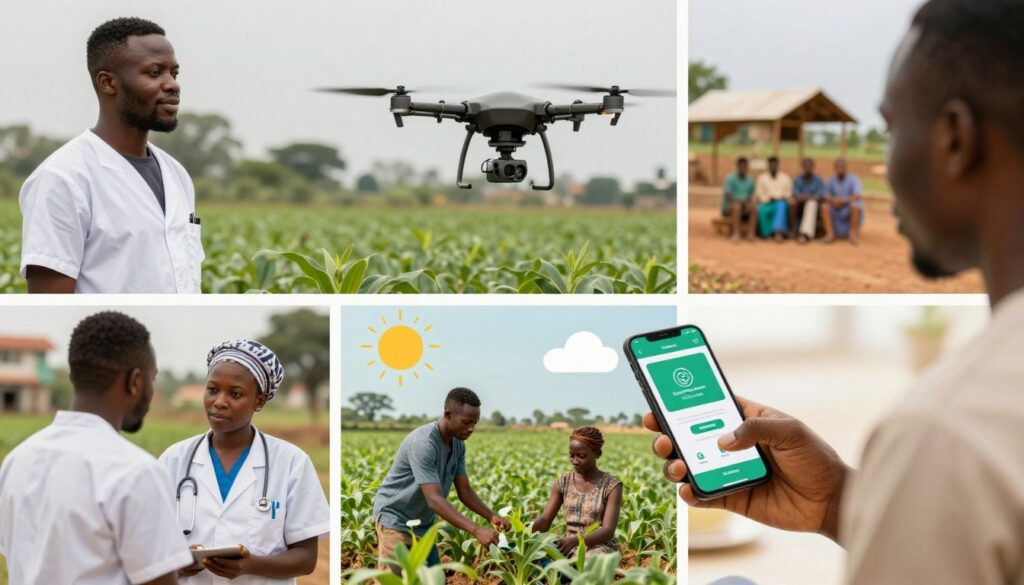
Financial technology innovations using AI expand access to banking and credit for underserved populations. These solutions transform lives by enabling economic participation previously impossible. Building such systems combines cutting-edge technology with social mission.
Practical Motivation Strategies
Abstract inspiration requires concrete practices maintaining day-to-day motivation. Implement systems supporting consistent progress regardless of fluctuating emotional states.
Establish specific, measurable learning goals with defined timelines. “Learn machine learning” remains vague; “complete Andrew Ng’s course and build three portfolio projects by June” provides clear target. Specific goals enable tracking progress and celebrating milestones.
Create accountability through public commitment or study groups. Announcing goals to friends, joining learning communities, or finding study partners increases follow-through likelihood. Social accountability leverages external motivation when internal drive falters.
Track small wins maintaining forward momentum. Completed tutorials, finished projects, or solved challenges represent progress worth acknowledging. Celebrate these incremental achievements preventing discouragement from distance remaining to ultimate goals.
Schedule consistent study time treating it as unmissable appointment. Consistency matters more than duration—two hours daily outperforms sporadic eight-hour sessions. Habits form through regularity making sustained learning increasingly automatic.
Rest and recovery prevent burnout threatening long-term sustainability. Intense learning periods require balanced recovery maintaining physical health and mental freshness. Sustainable pace wins marathon races; sprinting leads to exhaustion and abandonment.
Find inspiration through motivational quotes relevant to AI careers. Words from successful professionals and thought leaders provide perspective during challenging periods. Inspiration reinforces commitment when immediate progress feels insufficient.
Resources and Further Learning
Quality resources accelerate learning by providing structured education and reliable information. This curated collection helps Nigerian learners access valuable materials supporting their AI career journeys.
Online Learning Platforms
Coursera offers courses from top universities and companies. Specializations in machine learning, deep learning, and AI provide comprehensive curricula with certificates. Financial aid makes quality education accessible regardless of economic circumstances.
edX hosts courses from MIT, Harvard, and other prestigious institutions. MicroMasters programmes in data science and artificial intelligence offer rigorous academic training. Course materials often remain freely accessible even without purchasing certificates.
Udacity focuses on career-oriented nanodegrees collaboratively designed with industry partners. Programmes emphasize practical skills and portfolio development. Pricing exceeds other platforms but includes project reviews and career services.
Fast.ai provides free courses emphasizing practical deep learning. Teaching philosophy prioritizes getting started quickly, building intuition through coding before theoretical deep dives. Community forums offer substantial peer support.
Books and Publications
“Hands-On Machine Learning with Scikit-Learn, Keras, and TensorFlow” by Aurélien Géron provides comprehensive practical guide. Covers fundamental through advanced topics with clear explanations and code examples. Essential reference for working practitioners.
“Deep Learning” by Ian Goodfellow, Yoshua Bengio, and Aaron Courville offers thorough theoretical treatment. Mathematical depth makes this challenging but authoritative resource for serious students. Free online version increases accessibility.
“Python Machine Learning” by Sebastian Raschka presents practical machine learning techniques with Python. Balances theory and implementation helping readers understand both concepts and code. Regular updates maintain relevance as libraries evolve.
“Artificial Intelligence: A Modern Approach” by Stuart Russell and Peter Norvig serves as comprehensive AI textbook. Covers broad range from search algorithms through robotics and natural language processing. Standard university text providing solid foundations.
Communities and Networks
Data Science Nigeria provides Africa’s largest AI community. Regular competitions, training programmes, and meetups create supportive learning environment. Networking opportunities connect learners with experienced professionals and potential employers.
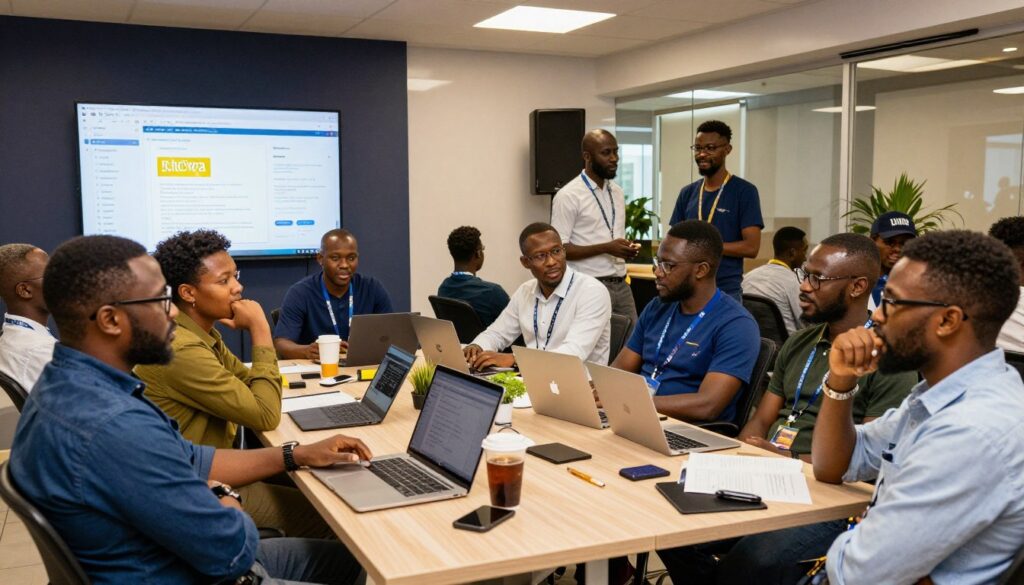
AI Saturdays Lagos offers free weekend workshops teaching artificial intelligence fundamentals. Volunteer instructors guide learners through practical exercises. Peer learning environment encourages questions and collaborative problem-solving.
Nigerian developers on Twitter and LinkedIn actively share knowledge and opportunities. Following hashtags like #TechNigeria, #AINigeria, and #DataScienceNigeria surfaces relevant content and conversations. Engagement builds visibility within community.
International communities including Kaggle, r/MachineLearning on Reddit, and Stack Overflow provide global perspectives and technical support. These platforms connect learners worldwide facilitating knowledge exchange transcending geographic boundaries.
Tools and Platforms
Jupyter Notebooks enable interactive coding combining code, visualizations, and narrative text. Standard tool for exploratory data analysis and communicating findings. Free and open-source with extensive community support.
Google Colab provides free cloud-based Jupyter environment with GPU access. Eliminates hardware barriers enabling deep learning experimentation without expensive equipment. Seamless Google Drive integration facilitates collaboration and storage.
Visual Studio Code offers excellent Python development environment. Extensions for linting, debugging, and Jupyter integration enhance productivity. Free and cross-platform supporting Windows, Mac, and Linux.
GitHub hosts code repositories enabling version control and portfolio showcase. Professional presence requires well-documented projects demonstrating capabilities. Free accounts provide unlimited public repositories sufficient for portfolio needs.
Kaggle offers datasets, competitions, and learning resources. Practice skills on real problems whilst comparing approaches with global community. Progression through competition rankings builds credible track record attractive to employers.
Additional Learning Pathways
For Nigerian students still in formal education, explore essential AI skills students should develop during their academic programmes. Early preparation significantly accelerates career entry after graduation.
Understanding typical career progression helps set realistic expectations. Review detailed information about AI career paths for Nigerians outlining journey from entry-level through senior positions with salary expectations and timeline estimates.
Moving Forward with Confidence
Artificial intelligence careers offer Nigerian professionals tremendous opportunities for impactful work, competitive compensation, and continuous intellectual challenge. The journey from beginner to employed AI professional requires dedication but remains entirely achievable through structured learning and persistent effort.
This guide has provided comprehensive roadmap covering essential knowledge areas, practical learning pathways, and strategic career development approaches. Success requires translating information into consistent action knowledge alone proves insufficient without implementation.
Begin today with small, manageable steps. Install Python, complete one tutorial, or join online community. Momentum builds from initial actions, however modest. Each completed lesson, finished project, or new connection represents progress toward ultimate career goals.
Challenges will inevitably arise. Infrastructure limitations, financial constraints, and self-doubt test commitment. Remember that obstacles appear universal among learners regardless of location. Nigerians have successfully navigated these challenges—you can too through resourcefulness and persistence.
The artificial intelligence field’s rapid evolution means no one possesses complete mastery. Continuous learning characterizes successful careers at all levels. Embrace beginner status as starting point rather than permanent condition. Every expert began knowing nothing.
Nigeria’s AI ecosystem grows stronger through each new professional joining the field. Your contributions whether developing solutions for local challenges or competing globally through remote work advance both personal career and national technological capabilities.
Connect with the broader community sharing this journey. Fellow learners, experienced professionals, and supportive organizations provide encouragement, guidance, and opportunities throughout your career. Success rarely occurs in isolation build relationships amplifying individual efforts.
Technology’s transformative potential extends beyond personal advancement. AI solutions you develop might improve healthcare access for millions, optimize agricultural productivity feeding nations, or democratize financial services for underserved populations. Purpose-driven work creates meaning transcending salary considerations.
Your AI career begins with decision to start. Resources exist, opportunities abound, and supportive communities welcome newcomers. What remains is commitment to consistent learning and unwillingness to abandon aspirations despite temporary setbacks.
The complete guide presented here equips you with knowledge needed to begin confidently. Implementation transforms information into skills, skills into portfolios, and portfolios into careers. Your future in artificial intelligence awaits take the first step today.

Oke O. Michael (HND, BA, MBA, MSc) is a tech-savvy professional with experience in sales, healthcare, digital marketing, and business development. A skilled editor and passionate web designer, he combines strong technical insight with creative problem-solving to deliver impactful digital and business solutions.